
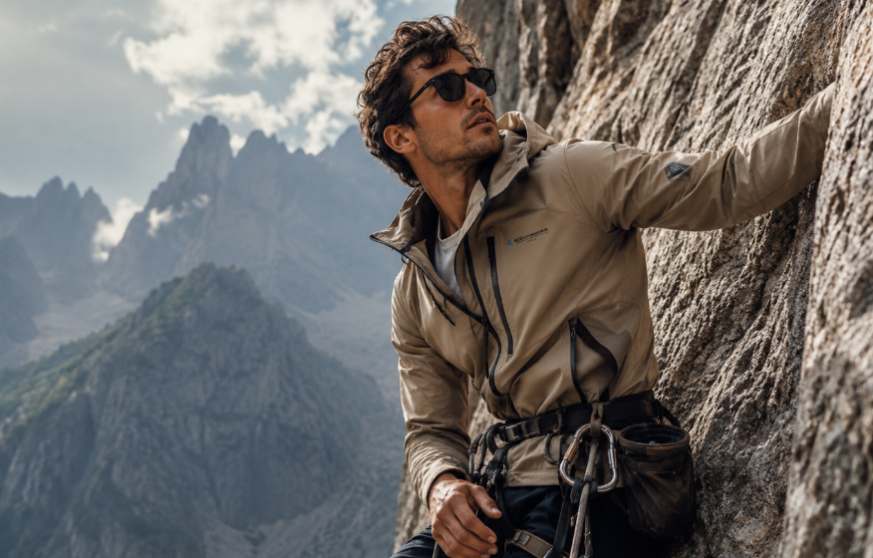
The image was created by us with AI, specifically for this article.
McKinsey says sportswear is expected to outpace the rest of the fashion market in 2025 by two to three percentage points in Europe and the United States, and by five to six points in China. The same report says challenger brands have been gaining market share from larger incumbents, which shows this is not just a mood board trend.
That is why The North Face, Patagonia, and a few similar names feel so well placed. Their appeal comes from a simple but powerful mix:
- technical trust
- strong product identity
- a design language that works far beyond the trail.
Why athlete credibility still does the heavy lifting
One reason performance brands matter so much in fashion is that their image is tested in real life. A runway outfit can look exciting, but an athlete wearing gear in real mountains, rain, snow, or cold gives people proof.
When shoppers see clothing worn by someone who needs to stay warm, dry, light, and able to move, the product feels easier to trust. Then that trust moves into everyday life. A jacket, fleece, shell, or shoe may never be used on an ice wall, but it still feels like it could handle something serious.
With this being said, brand ambassadors play a significant role in communicating these messages. What’s important is that these ambassadors are usually highly respected individuals not in fashion, but in sports and outdoor activities. That is why The North Face partners with people like climbing expert Fay Manners, who has credibility among athletes and sports lovers.
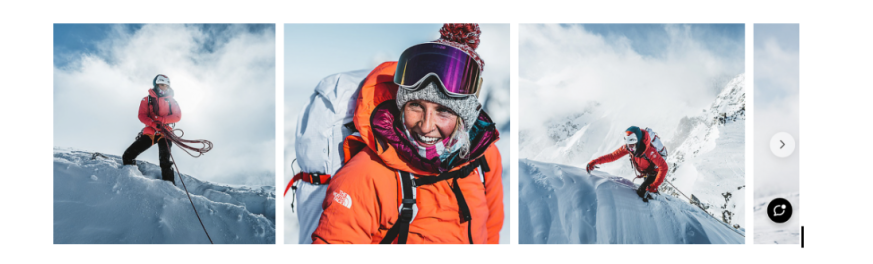
The web page where the apparel brand showcased Fay Manners as one of the professional figures working with them.
Manners is a British alpinist who lives in the Alps. Before becoming a full-time mountain athlete, she studied Information Science and worked in data and consulting. Later, she moved more and more toward serious climbing and life in Chamonix.
Loughborough University says she later signed with The North Face as a professional athlete. On her athlete page, she says she has done thirteen first ascents in two years, along with difficult ski descents in the Alps. Her highlights include a new route on an unclimbed mountain in Patagonia and the first female ascent of Phantom Direct on the Grand Jorasses.
Here is program with the professional climber, which shows the apparel in action, and that is worth more than a word-of-mouth marketing:
Real performance turns into buyer trust
This kind of record helps a brand much more than a normal ad. It shows buyers that the clothing is being used by someone who really understands what matters, such as:
- weight,
- easy packing,
- strong seams,
- weather protection,
- freedom to move,
- and comfort after many hours outside.
Even people who never plan to climb can understand this. If a serious athlete trusts the clothes, the product feels more tested and more believable.
In fashion, this gives the clothing a story that feels real, not fake. It also explains why performance brands often feel more convincing than brands that only try to copy the outdoor look, but the combination of both is brilliant everywhere. When the person wearing the clothes has real authority, the clothes gain some of that authority too. That makes buyers trust the brand more.
How the best brands turned function into scale
The big change is not just that performance brands became stylish. It is that they learned how to become fashionable without forgetting their technical purpose.
McKinsey says sportswear is still growing faster than many other parts of fashion. It also says smaller challenger brands took about three percentage points of market share from the two biggest brands between 2019 and 2024.
This shows that shoppers are paying attention to brands that have:
- a clear reason to exist,
- new and useful product ideas,
- and a strong link between the product and the person wearing it.
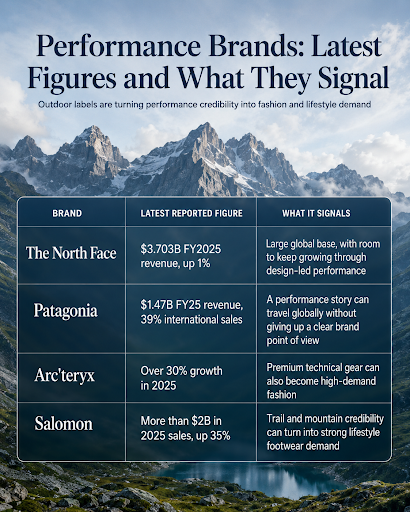
Original visual material, specifically created for this article.
The figures above come from recent company reports and point to the same pattern: performance brands are winning by staying specific, then widening the audience around that specificity.
The strategy behind those numbers is also telling. VF says direct-to-consumer made up 44 percent of its fiscal 2025 revenue, while Amer Sports says DTC reached 48.9 percent of revenue in 2025. That gives brands more control over presentation, pricing, and the full look of the product in stores and online. Patagonia pushes a different version of the same idea.
Its official footprint page says preferred materials made up 86 percent of its Fall 2025 line by weight and were used across 99 percent of products. In each case, the point is not only to sell a jacket or shoe. It is to build a world where function, design, and values all reinforce one another. That is how performance stops being a category and starts becoming a fashion language.
Why the fashion pull is getting stronger, not weaker
McKinsey puts the cultural side in this powerful sentence: “Sport has become an increasingly potent vehicle for self-expression.”
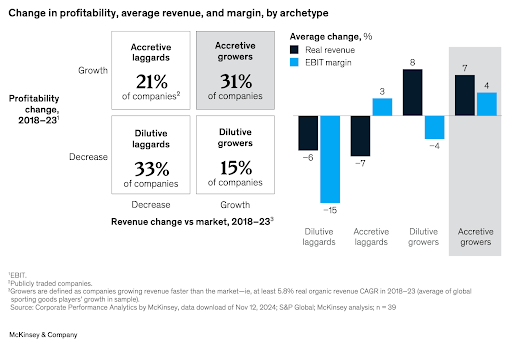
McKinsey’s report data shows that sporting goods, which include apparel as well, are not as attractive in terms of profitability as they may seem. This highlights the challenges brands face, even as they keep innovating and becoming more appealing.
The same report says 51 percent of active consumers see fitness and an active lifestyle as essential to their identity, and that two-thirds plan to give even more attention to exercise over the next two or three years. This helps explain why performance labels now mean more than utility. They communicate discipline, movement, health, and readiness, all of which translate neatly into personal style.
Performance brands now carry more than utility
That helps clarify why The North Face, Patagonia, Arc’teryx, and Salomon have had such strong fashion lift. They are not just selling technical features but a clean shape, a believable reason for every detail, and a product that feels grounded in real use.
Credibility has become the real style advantage
Patagonia adds depth through product life, repairing more than 40,000 garments through its Reno repair center in 2024 and carrying preferred materials across nearly all of its line. Amer Sports says Arc’teryx saw breakout growth in women and footwear in 2025, while Salomon said its sportstyle offer resonated strongly with younger and female consumers.
Performance now gives fashion something it has always wanted but does not always earn on its own: credibility. The brands that saw that early are the ones shaping what modern style looks like now.