
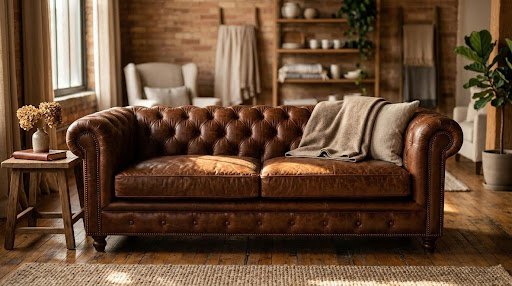
The Short Version
- The grade of the hide (full-grain, top-grain, corrected, bonded) tells you more about how a sofa will age than the price tag does.
- The finish matters almost as much: aniline shows the natural hide, semi-aniline adds a thin protective coat, and pigmented leather trades character for uniformity.
- “Genuine leather” is a nearly meaningless phrase, and US labeling guides exist precisely because the term gets abused.
- Sit tests reveal what spec sheets hide, so check the frame, the cushion cores, and the stitching in person.
- A well-made leather sofa should outlast three fabric ones, which changes the math on what “expensive” means.
A leather sofa is the biggest leather purchase most people ever make, and the quality range is wider than anything I see in bags or boots. The way to judge one before you buy comes down to four checks: confirm the actual grade of the hide, identify the finish, inspect the frame and cushion construction, and verify that the retailer will tell you exactly what animal and tannage you are sitting on. A seller who can answer those questions has nothing to hide, and a seller who cannot is usually charging full-grain money for bonded scraps.
What do the leather grades actually mean on furniture?
The vocabulary is the same one we use for bags and jackets, but the stakes are higher because a sofa takes abuse for decades. Full-grain leather keeps the entire grain layer with the surface intact, which is why it develops a patina instead of wearing out. Top-grain in the strict sense means the strong outer layer of the hide, and it covers corrected leathers that have been sanded and re-embossed for uniformity. Bonded leather sits at the bottom: shredded scraps glued together with polyurethane or latex, as the leather reference literature explains in more detail than most showroom staff ever will.
On a sofa, that hierarchy translates into how the seat looks in year ten. Full-grain and quality top-grain hides burnish and soften where you sit. Corrected hides hold their look for years but age less gracefully once the finish cracks. Bonded material tends to peel in sheets under daily use, which is why so many budget “leather” sofas look flayed after five years.
Why does the finish matter as much as the grade?
Two sofas cut from identical hides can behave completely differently depending on what the tannery did to the surface. Aniline leather is dyed with soluble dyes and left otherwise naked, so you see pores, scars, and every bit of character, and you also feel spills immediately. Semi-aniline adds a thin protective topcoat that buys you stain resistance while keeping most of the natural look. Pigmented or protected leather goes further, sealing the surface under an opaque coat that shrugs off kids and dogs at the cost of that cold, uniform feel.
None of these finishes is a mistake in itself, though plenty of them end up mismatched to the household that buys them. I would put an aniline hide in an adults-only living room and a semi-aniline or protected hide anywhere a toddler roams. The families I know who regretted their purchase almost always bought the finish for the showroom rather than for their actual life.
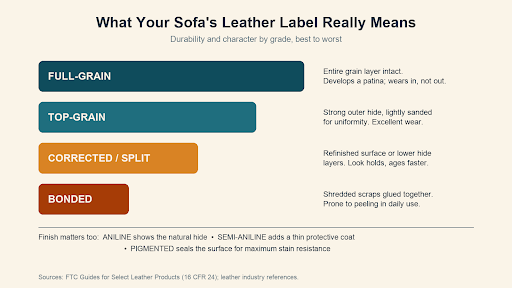
Alt text: Chart ranking leather sofa grades from full-grain to bonded with durability notes for each grade and finish
How do you check what the label will not tell you?
Labeling is where furniture buyers get burned, because “genuine leather” sounds reassuring and legally promises very little. The US Federal Trade Commission maintains guides for leather and imitation leather products that require sellers to disclose when a material is not what it appears to be, and the fact that such guides exist tells you how common the games are. Ask three questions in the showroom: what grade is the hide, what finish is on it, and which parts of the sofa are covered in it. That last question catches the classic trick of putting real leather on the seats and vinyl “match” on the sides and back.
Then use your hands, because leather answers honestly. Press a fingertip into the seat and watch whether fine wrinkles form and relax, since a surface that stays glassy is heavily coated or not leather at all. Smell it, flex a corner, and look at the back of a cushion for the fibrous suede-like reverse that split or bonded materials fake poorly. If sourcing ethics matter to you, ask whether the tannery is audited by the Leather Working Group, the multi-stakeholder body that certifies environmental practice across roughly a third of global leather production.
Where should you actually buy one?
Buy from someone who sells leather as a specialty rather than as one finish option among forty. A general furniture chain rotates suppliers seasonally, so the floor model and your delivery can come from different tanneries. Specialists stake their name on the hide, publish the grade and finish for each model, and will re-order a specific leather years later when you add a matching chair. In Toronto, the family-run Chesterfield Shop has sold leather seating since 1948, and browsing The Chesterfield Shop leather sofas shows what proper disclosure looks like, with grades, finishes, and customization options listed per model instead of a vague “top grain leather match” footnote.
Wherever you shop, apply the same standard you would to a good jacket or briefcase. Conditioned occasionally and kept out of direct sun, a well-tanned hide on a hardwood frame serves for decades, and the cost per year of sitting usually ends up lower than replacing a fabric sofa every seven years. Cheap leather is the most expensive kind.
Frequently Asked Questions
Is top-grain leather worse than full-grain?
Full-grain is better understood as the premium subset of top-grain, keeping its surface untouched where other top-grain leathers are lightly sanded for uniformity, and both wear far better than split or bonded material.
How can I tell bonded leather on a showroom floor?
Check the back or underside of a cushion for a uniform, fabric-like reverse, press for wrinkles that never form, and ask directly, since sellers must disclose composition when asked.
Does leather furniture need special care?
It needs less attention than most buyers expect: dust it, keep it away from radiators and direct sunlight, wipe spills promptly, and condition it once or twice a year the way you would any leather good you intend to keep.