
A leather bag rarely ages evenly. Its broad front panel may remain smooth while one corner darkens, a handle softens and the paint on a folded edge develops a fine crack. Those early changes form a map of movement, contact and load.
They reveal more about construction than a quick inspection of a new bag. Pattern design, reinforcement, stitching, hardware and daily contents all affect wear. Reading those areas helps separate attractive patina from damage that deserves repair.
Corners Record Every Surface
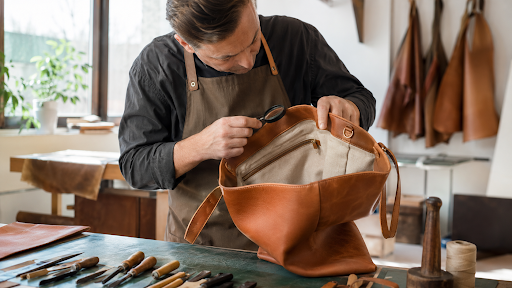
Bottom corners meet desks, floors, car seats and shelving. A structured briefcase concentrates contact on a narrow radius, while a soft tote rubs across a wider area. Light scuffing or gradual darkening can suit aniline or vegetable-tanned leather; exposed fibres, a split seam or peeling finish indicate damage.
Feet protect a rigid base only when they keep the leather clear of the surface. An overloaded centre may still sag onto the ground. Corner piping absorbs rubbing, but wear can eventually reveal its cord.
Surface condition therefore provides only part of the information needed to judge a product. A listing at minimum-deposit-master.com/5-dollar-deposit-casino identifies a casino’s stated minimum deposit, but it does not explain how cash and bonus funds are handled after a promotion is activated. The account may show the balances separately, while the bonus terms specify eligible games and wagering requirements. Before each slot spin, the game displays the selected stake, but the applicable balance conditions still come from those terms.
Handles Change Through Heat and Pressure
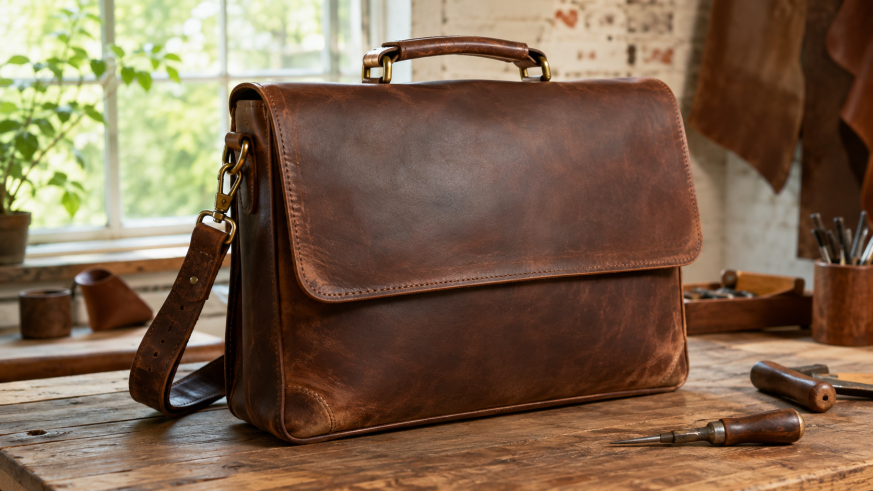
Handles receive skin oils, perspiration and compression. Pale leather often darkens under the fingers, while rolled handles may flatten at the centre. This is normal patina when the surface remains flexible and intact.
Construction becomes visible near each attachment. A reinforced patch spreads force beyond the exterior panel. Rivets distribute a concentrated load, but the surrounding leather still needs enough substance to resist elongation.
Early warning signs around handles include:
- stitch holes becoming longer or visibly distorted;
- a rivet tilting instead of sitting flat;
- leather layers separating at the attachment tab;
- edge coating opening where the handle bends;
- one side stretching more than the other.
A heavily loaded laptop bag shows these changes faster than a lightly packed day bag.
Strap Holes and Clips Show Repeated Motion
A shoulder strap bends at the buckle and rubs against its keeper. The usual hole may lengthen, especially on a thin strap or beneath a sharp buckle tongue. Moderate shaping is expected; tearing towards the edge compromises the strap.
Swivel clips and D-rings create metal-on-metal movement. Solid brass develops patina, while plated hardware may expose its base metal. Finish loss alone does not indicate weakness; a widening gate, loose screw or distorted ring affects security.
Edges Reveal the Finishing Method
An edge may be raw, burnished, folded or painted. Burnished edges gradually lose gloss and can be polished again, whereas edge paint flexes whenever the bag opens. Thick or poorly bonded coating may crack on tight curves.
The Horween Leather Company glossary explains that pull-up is temporary lightening caused when folding displaces oils and waxes. That colour movement is easy to mistake for surface damage, particularly on oily leathers such as Chromexcel. A mark that softens when gently rubbed behaves differently from a cut that has broken the grain.
Before applying conditioner or attempting a repair, the inspection should cover several points:
- the position of the colour change in relation to bends and contact areas;
- the continuity of the grain beneath the mark;
- any unusual dryness, stickiness, softness or loss of flexibility;
- the condition of stitching beside the affected area;
- care instructions supplied by the maker for that particular finish.
Conditioner cannot reconnect torn fibres, secure loose hardware or replace missing edge paint. Excess product may also darken absorbent leather, so testing an inconspicuous area remains sensible.
Linings Carry a Different Kind of Wear
The lining meets keys, cables, pens and device corners. Fabric often abrades near the base or pulls at an internal pocket. Light colours reveal marks early, even when the structure remains sound.
A loose lining moves against the contents and can disguise the cause of wear. Bonded material moves less but may be harder to repair. Leather adds weight, while canvas can balance strength with easier replacement.
Pocket seams deserve attention. A phone dropped repeatedly into a narrow compartment pressures its lower corners. Open stitching may let it slip between the lining and outer shell.
Patina Should Preserve the Structure
Good patina records use without preventing use. Colour deepens, high points become smoother and pull-up leather develops tonal variation. The bag remains secure, balanced and comfortable to carry.
Structural damage behaves differently. A torn handle tab, migrating rivet, failed zipper tape or opening seam will continue to worsen under load. Early professional repair may preserve original material and prevent a small failure from damaging an adjacent panel.
The first ageing point is therefore not automatically the weakest part of a bag. It is the place receiving the clearest evidence. Corners describe contact, handles reveal load, edges show flex and linings record the contents; read together, they provide a more useful review than surface patina alone.