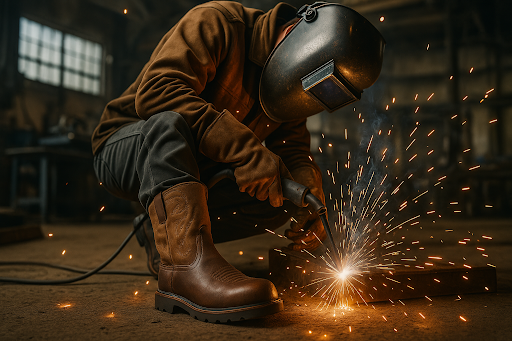
The Influence of Modern Fashion on Footwear


Fashion’s ever-changing nature is directly reflected in our footwear choices, where each specific design element is capable of representing your own sense of personal style and expression. This largely extends into the custom shoe market, where modern fashion acts as a source of inspiration for our footwear choices too!

A Catalyst for Inspiration

Modern fashion marks the fastest changing of trends the industry has seen – epitomised by the swift pace of social media and the access to quick production, thus enabling a quicker overhaul of styles due to instantaneous manufacturing processes. As a result, the volume of different shoe designs are endless, whether it be on the runway or in a high street or online store.

When it comes to footwear, both style and functionality have to be considered, therefore heightening the need for perfectly designed shoes that tick all boxes. The influence of modern fashion compliments this largely, where shoes are adapted to suit upcoming trends.

For instance, sneakers have become a largely transferrable shoe to be styled with smart casual attire, rather than being used explicitly for sports – for which they were originally designed for. Sneakers are even worn in certain office environments, representing this notable shift. Therefore, it’s fair to say that modern fashion shapes not just how shoes look and are designed, but also directly influences how they are worn and perceived in different environments.

A Collaboration Between Classic and Contemporary

Whilst referred to as ‘modern’ fashion, contemporary designs often take inspiration from their predecessors, meaning lines between old and new are creatively fused and historical references or undertones are often present.

This is also the case when it comes to footwear, where designers often blend past and present elements to reinvent classic silhouettes or types of shoe with a contemporary take such as a bright colour or the incorporation of a new trend.

Shoes are often reimagined, where, for instance, a classic Oxford shoe can be reinvented with bold colourings or with the addition of suede features, alluding to contemporary sneakers that are often purchased to be the statement piece within an overall look. It is these unexpected colours or elements that blend traditional and modern craftmanship, marking the overall influence of modern fashion and the boundaries it allows designers to explore!

Fashion’s Fast-track

Whilst footwear has always mirrored overall fashion trends, the connection between the two has only grown more in the wake of fast fashion, where footwear trends are forced to keep up with those of clothing trends to fulfil consumer demand.

Not only does modern fashion influence how shoes look in terms of their design elements, it also shapes how and where they are worn. Therefore, it’s fair to say that modern fashion enables consumers to use footwear as an increasing mean of self-expression, as well as challenging the functionality and use cases for different types of shoes.

Loafers or dress shoes are a key example of this, where they were once shoes designed purely to accompany formalwear and smart, refined dress, and they are now available in reimagined formats, incorporating brighter colours, or, for instance, colourful stitching or platform soles, to suit a different purpose.

Fashion and Functionality

When it comes to modern fashion, one of the primary aims for the designer is to meet the consumer’s requirement of style and comfort as a well-balanced combination. This sees the likes of yoga pants and hoodies become transferrable between their original function in the gym as well as becoming a presentable, acceptable wardrobe staple to wear to the mall, for example.

The same principle applies when it comes to shoes – where comfort is arguably even more significant, as nobody wants to go through their day with a pair of uncomfortable shoes! Footwear is now designed with multiple purposes in mind, where we’ll often look for a pair of shoes that can be worn in multiple situations with transitional usability between work, social and casual environments.

Conclusion

Fashion and footwear go hand-in-hand when it comes to keeping up with trends and fulfilling consumer demands. Modern fashion directly influence footwear, both in terms of their visual appearance and design elements and the general use case for shoes. This often sees the fusion of classic shoes be reinvented to suit new trends.

The Best Furniture to Fit Out a Gaming Room

The Best Furniture to Fit Out a Gaming Room

Designing a gaming room is all about creating a space that feels comfortable, functional, and immersive. Whether someone enjoys console gaming, PC gaming, or online entertainment through platforms like Rainbow Riches Casino, the right furniture can elevate the entire experience. A well-designed gaming room blends practicality with style, ensuring that long sessions remain enjoyable and that the space reflects the personality of the player. For those who enjoy live casino experiences such as lightning roulette, having the right setup can make the atmosphere even more engaging.

Below is a detailed look at the best furniture pieces to consider when fitting out a gaming room, along with why each one plays an important role in building the perfect setup.

Ergonomic Gaming Chairs for Comfort and Support

A high-quality gaming chair is one of the most important pieces of furniture in any gaming room. Long sessions require proper support, and ergonomic chairs are designed to reduce strain on the back, neck, and shoulders. Features such as adjustable armrests, lumbar cushions, reclining functions, and breathable materials help maintain comfort over extended periods.

These chairs also add a stylish touch to the room, with many designs available in sleek colours and modern finishes. For players who spend time enjoying online games, streaming, or exploring casino-style entertainment, including fast-paced titles like lightning roulette, a supportive chair is essential.

Spacious Gaming Desks for Organisation

A gaming desk provides the foundation for the entire setup. The best desks offer plenty of surface area for monitors, keyboards, consoles, and accessories. Cable-management systems, built-in shelves, and sturdy construction help keep the space organised and clutter-free.

Some gaming desks also include LED lighting, adjustable heights, or curved designs that enhance immersion. A well-chosen desk ensures that everything is within reach and that the room feels polished and functional.

Multi-Monitor Stands and Mounts

For players who enjoy PC gaming or multitasking, multi-monitor stands are a valuable addition. These mounts allow screens to be positioned at the perfect height and angle, reducing neck strain and improving visibility. They also free up desk space, making the room feel more open and organised.

Whether someone uses multiple screens for gaming, streaming, or browsing platforms like Rainbow Riches Casino, adjustable monitor mounts help create a clean and efficient setup. They’re especially useful for players who enjoy switching between different types of entertainment, from action games to live casino formats like lightning roulette.

Storage Units to Keep the Room Tidy

A gaming room can quickly become cluttered without proper storage. Shelving units, cabinets, and drawer systems help keep accessories, controllers, headsets, and game collections neatly organised. Many players also use display shelves to showcase collectibles, themed décor, or gaming memorabilia.

Storage furniture not only keeps the room tidy but also adds personality. Choosing pieces that match the overall style of the room helps create a cohesive and visually appealing environment.

Comfortable Sofas and Lounge Seating

Not every gaming session takes place at a desk. Many players enjoy relaxing on a sofa while playing console games, watching streams, or enjoying casual entertainment. A comfortable sofa or sectional adds versatility to the room, making it suitable for both solo play and group sessions.

Lounge seating also helps create a welcoming atmosphere, turning the gaming room into a social space where friends can gather and enjoy entertainment together.

Ambient Lighting Furniture

Lighting plays a major role in setting the mood of a gaming room. Furniture pieces that incorporate built-in lighting—such as LED shelves, illuminated display cases, or backlit TV stands—help create an immersive atmosphere. Soft, adjustable lighting reduces eye strain and enhances the overall aesthetic.

Many players enjoy matching their lighting to the theme of the game they’re playing, creating a dynamic and visually engaging environment.

Sound-Enhancing Furniture

Acoustic panels, sound-absorbing wall art, and media cabinets designed for audio equipment can significantly improve the sound quality in a gaming room. These pieces help reduce echo and enhance clarity, making everything from action sequences to atmospheric music more enjoyable.

For players who enjoy immersive audio experiences, sound-enhancing furniture is a valuable addition that elevates the entire room.

Why Furniture Matters in a Gaming Room

The right furniture transforms a gaming room from a simple space into a personalised entertainment hub. Comfort, organisation, and atmosphere all play important roles in creating an enjoyable environment. Whether someone prefers fast-paced action games, relaxed sessions, or online entertainment through platforms like Rainbow Riches Casino, a well-designed room enhances every moment. And for fans of visually striking live games such as lightning roulette, the right setup can make the experience feel even more immersive.

By choosing furniture that balances style and practicality, players can create a space that feels both functional and uniquely their own.


The Best Features of a Gaming Room

Creating a gaming room goes beyond simply arranging tables and seating. A successful space balances aesthetics, comfort, and functionality, ensuring that adult visitors feel at ease while enjoying a structured environment. Thoughtful design decisions contribute to both the atmosphere and the overall usability of the room, creating an inviting experience that encourages responsible participation in games and leisure activities.

One of the key features of a quality gaming room is comfortable and practical seating. Chairs and stools made from premium materials, such as leather, provide both durability and style. Leather seating not only enhances the visual appeal of the space but also offers support and comfort during extended periods of use. The choice of materials can set the tone of the room, conveying a sense of sophistication and attention to detail, while maintaining an environment that is welcoming for adult players.

Lighting plays an equally important role in shaping the gaming experience. Proper illumination highlights key areas of the room, such as tables, machines, or interactive spaces, without causing glare or discomfort. Adjustable lighting options can accommodate different activities and times of day, providing flexibility and creating a comfortable ambiance. Combining natural light with well placed artificial lighting ensures that the room feels open and inviting while supporting clear visibility for all participants.

The layout of a gaming room is central to both functionality and experience. An organised space encourages smooth movement between areas, reducing congestion and making it easier for adults to navigate the environment. Designers often create distinct zones for different activities, such as card tables, slot machines, or social areas, using furniture placement, flooring, and subtle architectural elements to delineate spaces. This approach enhances both usability and aesthetics, contributing to an intuitive and enjoyable setting.

Incorporating technology in a gaming room can also enhance the experience. Interactive displays, high quality sound systems, and digital interfaces provide engagement and entertainment while remaining easy to use. Modern gaming rooms often feature screens with clear instructions or visual guides for games, ensuring that adult users can participate comfortably and without confusion. Platforms may also offer optional features, such as guided tutorials, which support informed and responsible engagement.

A gaming room’s décor contributes significantly to the overall impression of the space. Carefully selected materials, colour schemes, and design elements can create a cohesive and appealing environment. Leather accents, whether in furniture, panelling, or decorative details, add a touch of luxury while remaining practical and durable. Textures and finishes can be chosen to complement other design features, providing a polished appearance that enhances the overall experience without distracting from the primary purpose of the room.

Storage and organisation are essential aspects that are often overlooked. Pre planned cabinets, shelves, and concealed storage solutions allow equipment and accessories to be easily accessible without cluttering the space. This ensures that tables, machines, and seating areas remain uncluttered and visually appealing while allowing staff or hosts to manage the room efficiently. Proper organisation contributes to both operational efficiency and the comfort of adult visitors.

The inclusion of optional gaming features can also contribute to engagement, provided they are presented responsibly. For example, instructional or demonstration content on topics such as how to win at casino slots can be offered within a structured environment, giving adult visitors guidance on how games function without implying guarantees or encouraging excessive participation. When integrated thoughtfully, such features enhance understanding and support informed engagement.

Acoustic design is another important consideration. Sound management through ceiling panels, wall treatments, or strategic layout planning ensures that the room maintains a comfortable noise level. Proper acoustics allow for conversation and interaction without distraction or fatigue, supporting a positive environment for both socialising and gaming.

Comfort extends beyond seating and lighting to include climate control and ventilation. A ventilated room with consistent temperature control ensures that adult visitors remain comfortable over extended periods. Air circulation systems, quiet fans, or automated climate solutions contribute to a pleasant environment while maintaining the overall design aesthetic.

Personal touches and thoughtful amenities help complete a gaming room. Refreshment areas, reading corners, or small lounge spaces allow adults to take breaks and relax in a structured manner. These features provide balance, giving visitors a sense of comfort and convenience while maintaining the focus on responsible enjoyment of games and activities.

The best gaming rooms combine practical design, quality materials, and careful attention to atmosphere. Leather seating, effective lighting, clear layout, and integrated technology create a cohesive and inviting space that prioritises both comfort and functionality. Thoughtful design, operational efficiency, and aesthetic appeal come together to make gaming rooms spaces that are both enjoyable and sophisticated, meeting the expectations of adult visitors while providing a well-rounded experience.

The Best Leather Accessories for Poker Night: Card Holders, Chip Cases, Valet Trays, and Travel Wallets


A great poker night is never just about the cards. It is about the setup, the atmosphere, and the little details that make the table feel intentional. Good lighting matters. Comfortable seating matters. The right deck matters. But if you want the evening to feel polished from the moment guests arrive, accessories do a surprising amount of the heavy lifting.

That is where leather stands out.

The appeal of leather has never been limited to boots, belts, or briefcases. The same traits that make leather compelling in everyday carry also make it a natural fit for poker night. It brings durability, texture, character, and a sense of permanence that cheaper synthetic materials rarely match. BestLeather’s editorial approach has long centered on those qualities, especially in wallets and EDC pieces where material quality, stitching, and long-term use actually matter. For readers who also follow the broader poker space, resources like a coinPoker review on worldpokerdeals.com can offer useful context on how poker culture extends beyond the table and into the wider online playing experience.

A leather accessory also ages differently from most game-night gear. Plastic gets scratched. Faux leather peels. Thin fabric looks tired. Real leather tends to do the opposite. It settles in, develops a patina, and starts to look better once it has actually been used. That makes it especially appealing for hosting pieces and travel items that keep coming back.

If you are putting together a poker-night setup, or simply looking for better gear that feels less disposable, a few leather accessories can make a real difference. The key is choosing pieces that are functional first and attractive second. The best leather goods always balance both.

Card Holders That Keep the Table Organized

Card holders are one of the easiest ways to add refinement to a poker setup without turning the table into a costume piece. They are practical, compact, and especially useful when you want to keep extra decks tidy between games or bring a more organized feel to home hosting.

The best leather card holders should do three things well. First, they should protect the deck without crushing it. Second, they should open and close cleanly without fighting the user. Third, they should feel good in their hands. Those points sound basic, but they separate a well-made accessory from something that looks nice in photos and disappoints in actual use.


This is where BestLeather readers already know what to look for. Construction matters. Clean stitching matters. Leather selection matters. A stiff, overfinished piece may look sleek at first but can feel awkward over time. A better option is usually full-grain or quality top-grain leather with enough structure to hold shape while still breaking in naturally. BestLeather consistently emphasizes those traits in wallet and EDC coverage, especially the value of durable leather, thoughtful design, and construction that holds up beyond the first impression.


A good leather card holder also adds a small ritual to the game. Pulling out a deck from a well-made sleeve or case simply feels better than reaching into a torn cardboard box. It is a subtle upgrade, but that is often how quality works. It improves the experience without demanding attention.

Chip Cases That Do More Than Store Chips

If one leather accessory defines a polished poker night, it is probably the chip case. This is the piece that says the game is not an afterthought. It is also the one most likely to see regular handling, travel, and wear.

A quality chip case should be durable enough to carry weight without sagging or straining at the seams. That means leather quality matters, but so do reinforcement, hardware, lining, and interior layout.


Look for a case with sturdy handles, a secure closure, and an interior that keeps chips from shifting too much in transit. Flimsy inserts can ruin the experience, even if the exterior looks impressive. The best cases feel substantial without becoming awkward to carry. They should be structured but not bulky to look expensive.


This is one of those categories where leather brings more than aesthetics. A well-built leather chip case can become part of the night’s ritual. It is the item you set down before the first hand is dealt. It creates anticipation. It frames the event. In that sense, it functions like a good weekender bag or briefcase. It is not only storage. It shapes the experience around it.


For BestLeather readers, this should sound familiar. The site often values gear that blends utility with personality, and a chip case fits that mold when done right. It should be practical, durable, and satisfying to use, not just decorative.

Valet Trays That Keep the Night Under Control

Valet trays are often associated with dressers and entryway tables, but they are just as useful on poker night. In fact, they may be one of the smartest additions to the table area.

A leather valet tray gives players a place to set down watches, keys, cash, or small personal items that would otherwise clutter the playing surface. That may sound minor, but clutter can quickly change the tone of a game. An overloaded table feels cramped and chaotic. A clean table feels intentional.


Leather works especially well here because valet trays are supposed to be touched constantly. They should feel soft but sturdy, and hold their shape without looking rigid. A good tray also brings some visual warmth to the table area, which is often dominated by chips, cards, glassware, and hard surfaces.


This is the kind of crossover item that fits both EDC culture and home use. It is functional, tactile, and easy to appreciate over time. Like a good wallet or desk accessory, it earns its place through repetition. The more you use it, the more natural it feels to keep around.

For poker hosts, a valet tray helps create order without feeling fussy. It is the sort of detail guests may not comment on directly, but they notice it. Everything has a place, and the whole setup feels more composed because of it.

Travel Wallets for Players on the Move

Not every poker night happens at home. Some players head to a friend’s house across town. Others travel for weekend games, card-room visits, or small tournament getaways. In those situations, a travel wallet becomes more relevant than many people expect.

A good leather travel wallet is not just a bigger bifold. It should help organize the essentials you need when moving between locations. Cash, cards, ID, notes, hotel keys, receipts, and maybe even a pen all need a place. BestLeather has long covered travel-oriented wallets and slim EDC designs with exactly this kind of practical focus, often emphasizing usability, layout, and long-term value over gimmicks.


For poker-related use, the ideal travel wallet strikes a balance between portability and structure. It should not become a catch-all that grows bulky after one night. At the same time, it should be spacious enough to keep essentials sorted and accessible.


Leather makes sense here because travel items take abuse. They get shoved into bags, handled constantly, and exposed to more wear than most stationary accessories. Better leather tends to respond well to that kind of life. Rather than looking worn out too quickly, it often starts to tell a story. That is part of the reason leather remains so popular in wallet design, especially among readers who value longevity over trend.


A travel wallet may not be the flashiest poker-night accessory, but it is one of the most useful, especially for players who appreciate gear that serves more than one setting.

What BestLeather Readers Should Actually Look For

When shopping for leather accessories for poker night, the smartest approach is the same one BestLeather applies to wallets, belts, and EDC pieces. Ignore empty luxury language and focus on the fundamentals. BestLeather’s buyer-oriented content repeatedly points readers toward authenticity, craftsmanship, functionality, and durable materials rather than surface-level branding.


That means asking a few simple questions.

Is the leather real, and is it the kind that ages well?

Is the stitching clean and reinforced where stress is likely to happen?

Is the hardware solid, or does it feel like an afterthought?

Does the item solve a real problem, or does it only look good in product photos?

Will it still be satisfying to use a year from now?


Those questions matter more than trend, packaging, or marketing copy. They also tend to lead buyers toward better products.

Final Thoughts

Leather and poker make sense together for the same reason leather works so well in everyday carry. Both reward attention to detail. Both are tactile. Both benefit from gear that feels dependable in the hand. And both are at their best when function comes first.


For poker night, the right leather accessories do not need to be flashy. A strong card holder, a well-made chip case, a useful valet tray, and a dependable travel wallet can quietly elevate the whole experience. They make the night feel more organized, more considered, and more enjoyable without overwhelming the reason everyone came in the first place.


That is probably why these pieces fit BestLeather so naturally. They live at the intersection of craftsmanship, practicality, and personal style. And when they are chosen well, they do what the best leather goods always do. They become better with use.

9 Best Leather Hat Brands for Western Wear, Work, and Everyday Use

Image by Freepik

Leather hats have long held a unique place in Western style and outdoor culture. Unlike straw or felt hats, leather offers a rugged durability that makes it ideal for demanding environments, whether working on a ranch, riding trails, or simply navigating everyday life with a touch of Western character.

A well-made leather hat does more than complete an outfit. It protects from wind, sun, and light rain while maintaining its structure through years of use. Because leather is naturally durable and weather-resistant, it has remained one of the most trusted materials for hats designed for outdoor work and travel.

Today, leather hats are worn far beyond ranches and rodeos. Western fashion has become increasingly mainstream, and many brands now produce leather hats that combine traditional craftsmanship with modern design. Some focus on rugged outdoor performance, while others emphasize fashion-forward Western aesthetics.

Below are nine respected brands producing leather hats suited for Western wear, work environments, and everyday use.

1. American Hat Makers

When discussing leather hats that combine craftsmanship with everyday versatility, American Hat Makers western-style leather hats consistently stand out among the most respected options in the industry. The company has spent decades refining its hatmaking expertise, producing durable designs that blend Western tradition with practical functionality.

Anyone exploring the leather hats crafted by American Hat Makers quickly notices the attention given to material quality. Leather hats rely heavily on the durability of the hide itself, and the brand uses carefully selected leather that maintains its structure while remaining comfortable over time. This balance allows the hats to handle outdoor use without becoming stiff or difficult to wear.

Another defining strength of American Hat Makers is its focus on functional design. Leather hats from the brand often feature wide brims that provide shade from the sun and help shield the face and neck from harsh weather conditions. This makes them suitable not only for Western fashion but also for work environments, outdoor travel, and everyday wear.

The brand also understands that durability must be paired with comfort. Many hats include breathable interiors and carefully shaped crowns that sit securely without creating pressure points during long wear. These thoughtful design elements make the hats practical for extended outdoor activities such as ranch work, riding, or hiking.

Customers browsing the handcrafted leather hats from American Hat Makers often appreciate the brand’s commitment to longevity. Instead of producing disposable accessories, the company focuses on hats designed to last through years of use while developing the natural character that quality leather gains over time.

For individuals looking for a leather hat that delivers both Western authenticity and dependable craftsmanship, American Hat Makers remains one of the strongest choices available today.

2. Stetson

Stetson is one of the most iconic names in Western hatmaking. Founded in the 19th century, the brand helped popularize the classic cowboy hat and remains a major influence in Western fashion today.

While Stetson is best known for felt cowboy hats, the company also produces leather styles designed for rugged outdoor use. These hats often feature classic Western silhouettes with wide brims and high crowns, maintaining the traditional cowboy aesthetic.

3. Outback Trading Company

Outback Trading Company is widely recognized for producing rugged leather hats inspired by Australian and Western outdoor traditions. The brand emphasizes durable materials and practical design features suited for outdoor work and travel.

Many of its leather hats are designed to withstand harsh conditions while maintaining a classic Western look, offering styles that range from traditional cowboy hats to more relaxed outdoor silhouettes.

4. Bullhide Hats

Bullhide has become a popular name among Western fashion enthusiasts. The brand produces a wide variety of leather cowboy hats that combine bold styling with durable materials.

Many Bullhide designs feature decorative hatbands, distinctive crown shapes, and vintage-inspired finishes that give the hats strong visual character.

5. Scippis

Scippis is known for producing rugged leather hats inspired by Australian outback culture. These hats are often favored by outdoor workers, riders, and travelers who need reliable protection in unpredictable weather.

The brand’s leather hats typically emphasize durability, ventilation, and practical functionality.

6. Greeley Hat Works

Greeley Hat Works represents the artisan side of Western hatmaking. Founded in Colorado, the company has produced handcrafted hats for more than a century and is known for its custom hat services.

While the brand specializes in felt cowboy hats, it also offers custom leather options that appeal to customers seeking personalized Western headwear.

7. Bailey Western

Bailey Western blends classic Western heritage with contemporary style. The brand produces hats designed for both working cowboys and fashion enthusiasts who appreciate traditional Western silhouettes.

Leather hats from Bailey often feature refined shapes and balanced proportions that work well for everyday wear.

8. Kemo Sabe

Kemo Sabe has gained a reputation for producing high-end Western hats favored by celebrities and fashion enthusiasts. Based in Aspen, the brand specializes in luxury Western wear with strong craftsmanship and distinctive styling.

Many of its leather hats are custom-made and designed as statement pieces that combine Western tradition with upscale fashion.

9. Resistol

Resistol is another respected Western hat brand known for durable construction and authentic cowboy styling. Founded in 1927, the company built its reputation producing hats designed for professional rodeo riders and working ranchers.

Resistol’s leather hat designs maintain the brand’s focus on reliability and strong materials, making them popular among those who prioritize performance as well as style.

How to Recognize a High-Quality Leather Hat

When shopping for a leather hat, understanding the quality of the material can make a significant difference in durability, comfort, and long-term appearance. Not all leather hats are created equal, and recognizing a few key characteristics can help buyers identify hats that will age well and maintain their structure over time.

One of the most important indicators is the type of leather used. Full-grain leather is generally considered the highest quality because it retains the natural grain of the hide. This type of leather is strong, breathable, and capable of developing a rich patina as it ages. Hats made from full-grain leather tend to last longer and improve in character with regular use. Top-grain leather is another reliable option, offering durability with a slightly more refined finish.

Texture and flexibility can also reveal a great deal about leather quality. Genuine leather typically feels supple rather than stiff and shows subtle natural variations in the grain. Synthetic materials or heavily processed leather often look overly uniform and may feel rigid or plastic-like when handled.

Another feature to examine is construction and finishing details. High-quality leather hats usually include reinforced stitching, well-attached hatbands, and carefully shaped brims that maintain their form. Interior sweatbands and breathable linings can also improve comfort, particularly for hats intended for outdoor wear or long periods of use.

Finally, craftsmanship plays a major role in how well a leather hat performs over time. Brands that specialize in hatmaking often shape leather carefully so that the crown and brim maintain balance while remaining comfortable. This attention to detail ensures the hat not only looks good but also withstands regular wear in outdoor conditions.

Understanding these elements can help buyers invest in leather hats that combine durability with timeless style, pieces that will continue to perform well and develop character as they age.

Why Leather Hats Remain a Western Classic

Leather hats continue to appeal to both Western enthusiasts and everyday wearers because they combine durability with distinctive style. Unlike many lighter materials, leather develops character over time, gaining a patina that reflects years of use.

For outdoor work, leather hats provide reliable protection against sun, wind, and light rain. Their durability makes them ideal for ranch work, riding, and travel in challenging conditions.

At the same time, leather hats have become fashionable accessories. Western-inspired clothing and accessories frequently appear in modern fashion, and leather hats provide a bold finishing touch that reflects authenticity and craftsmanship.

Brands like American Hat Makers and other respected Western hatmakers demonstrate how traditional materials can continue to evolve within contemporary fashion. By combining rugged durability with thoughtful design, these brands ensure that leather hats remain one of the most enduring pieces of Western style.

Quality on a Budget: Lifestyle Products That Deliver

There is a particular kind of frustration that comes from spending good money on something that falls apart too soon. The seam gives out, the finish peels, or the product just does not hold up the way you expected. You tell yourself it was a one-off, but it keeps happening, and at some point you start to wonder if price is even a reliable signal at all.

It is not, at least not on its own. Plenty of well-made products sit at modest price points because the brand behind them spends money on materials instead of advertising. Cannabis shoppers have been figuring this out for a while now. The market for affordable weed shake for sale has grown steadily because buyers realized they were paying a premium for appearance, not performance. People who roll regularly, cook with cannabis, or make their own infused oils do not need picture-perfect buds. They need something that works, and shake does exactly that.

Photo by Nataliya Vaitkevich

The Price Signal Is Broken

Walk into almost any retail category and you will find the same pattern. The most expensive option is not always the best one. Sometimes it is, but often you are paying for a name, a storefront, or a campaign that ran during a major sporting event.

Shake makes this easy to see. The smaller flower pieces that break off during handling and packaging carry the same cannabinoids and terpenes as whole buds. The chemistry does not change just because the piece is smaller. What changes is the look, and for most real-world uses, that is completely irrelevant. Rolling a joint, pressing rosin, or simmering butter on the stove does not require a perfectly formed bud.

Leather works the same way. A full-grain hide sourced from a smaller tannery can wear better, age better, and last longer than a bonded leather product from a brand charging three times as much. The difference lives in the material, not the marketing. Once you know how to read that difference, the expensive option stops looking like the safe one.

What to Actually Look at Before You Buy

Most purchase regrets trace back to one thing: skipping the part where you actually evaluate what you are buying. A few straightforward checks work across almost any lifestyle category.

  • Start with what it is made of. Leather grade and tanning method tell you more than a brand name ever will. For cannabis, a clear label with lab-tested cannabinoid content tells you what you are actually getting.
  • Look at where it comes from. Brands that share sourcing information are usually the ones that have something worth sharing. Vague answers on this question are a sign worth noting.
  • Be honest about how you will use it. A heavily structured leather bag is not right for someone who wants a light everyday carry. Premium whole flower is not necessary for someone who primarily cooks with cannabis.
  • Trust your senses. In leather, weight and firmness tend to indicate genuine material. In cannabis, fresh aroma and good texture tell you more than a nice package does.
  • Read the return policy. A brand that makes returns easy is signaling something real about its confidence in the product.

These checks take a few minutes. Done consistently, they reshape how you shop in any category.

Two Different Products, One Shared Instinct

Leather buyers and cannabis consumers do not have much obvious overlap, but they tend to share a particular mindset. Both groups have usually been burned by flashy products that underdelivered. Both have learned, through actual experience rather than theory, that the thing that looks best on the shelf is not always the thing that serves them best at home.

Understanding the real differences between full-grain, top-grain, and corrected-grain leather is the kind of knowledge that changes your purchases permanently. A full-grain vegetable-tanned wallet bought at a fair price will develop a patina over years of use. A split-leather piece bought for considerably more will start showing wear in months and will not recover from it. 

USDA Agricultural Research Service data on cannabis plant chemistry indicates that cannabinoid levels depend primarily on cultivation and handling conditions, not on whether the final product is a whole bud or a broken piece. The shake from a well-run operation delivers. The price gap between it and premium flower reflects cosmetics, not chemistry.

Something Has Shifted in How People Shop

It has been happening gradually, but it is hard to miss now. Buyers across categories are researching more before they commit, defaulting less to brand recognition, and asking more direct questions about what something is actually made of. Smaller leather brands that once struggled to compete with department store names have found real audiences built on product quality alone. In cannabis, functional products like shake and trim are gaining ground because more buyers understand what they are and what they are for.

This is not about being cheap. It is about being clear-eyed. Knowing how different leather types actually perform in daily use before walking into a store is a version of the same skill as knowing that shake covers your needs at a lower cost than premium flower. The habit underneath both is the same: understand what the product does before you decide what it is worth.

Getting More Without Spending More

The American Customer Satisfaction Index has tracked consumer satisfaction data for decades, and one pattern holds across industries: informed buyers report higher satisfaction than those who relied on price or brand alone when making a purchase. That holds up in practice across categories. A full-grain leather card holder bought at a reasonable price and carried daily will outlast a flash piece bought for a multiple of the cost. A quality shake blend will do everything a home cook or regular roller needs, without the price that comes attached to whole-flower aesthetics.

Neither of those is settling. Both are just buying well.

Pick one category you spend money on regularly and actually learn it. Find out what the grades mean, where the material comes from, and what the product genuinely needs to do for you. Then apply that same lens the next time you shop. The purchases get better, the regrets get fewer, and the money you were losing to branding starts going somewhere more useful.

All you need to know about Leather Dog Collars Before You Buy One


A Dog’s love is pure and intense. They express their love through touch and deep eye contact. It is a great companion for someone seeking emotional support. Your dog won’t expect anything from you; even if you don’t give anything in return they will never stop loving you. A dog is the only soul in this world who could love you unconditionally despite of who you are and what you have. So, don’t you think souls like this deserve the best ? If you are thinking of gifting sometimes best for your dog, don’t give a second thought and go for a premium leather belt. Here is why: 

Durability Of Leather Collars

There are certain advantages of a leather collar which make it stand out from the crowd. Talking about durability, collars made of real leathers will withstand any situation and are an ideal choice for everyday use. The Full-grain leathers are known for their long-lasting power and durability which might last up to 5 years on an average even if ill treated or roughly handled. Whereas, if you maintain it properly it could last for the lifetime of your dog. 

Comfort of Leather Collars

It is vital to know how your dog feels about its collar. Check whether the collar is comfortable for your pet or whether it enjoys it. Full-grain leather is known for its comfort and quality; they are soft and flexible, making it a great choice for your fluffy friend. The word ‘fluffy’ reminds of an adorable slot game named Fluffy Favourites inspired by stuffed animals and claw machines, bringing in a nostalgic carnival atmosphere. Okay, now, coming back to the topic, Full-grain leathers are breathable materials which distribute adequate oxygen supply to your dog, preventing any sort of discomfort. Also, leathers are often warm in nature, helping you  keep your friend warm during the months of winter.


Different Collars for Different Needs

Leather is an adaptable material which can be molded as per your requirements. Either you prefer a simple collar or a more secure one, anything could be made possible. There is a collar for every single need. Whether you need one for everyday activity or one for that wild one who keeps pulling aggressively, or the ones that brilliantly unties a collar, there are different choices for different requirements. Find the one that could best suit your dog’s nature and gift them accordingly. 

Types of Leathers  

Full-grain Leather

Full-grain leather is the highest-quality leather found in the market. It is highly durable and comfortable. This type of leather is made from the top layer of the animal pelts and does not undergo a full finishing process. Picking a leather product made out of Full-grain Leather guarantees to withstand a longer period. Although, you’ll find the natural imperfections of scars due to the lack of buffering process they remain stronger than any other type. You can easily identify a Full-grain leather with the natural texture and imperfections found in them. However, these are often costly and won’t come under budget. 

Genuine Leather 

Genuine Leather is also leather that is made from real animal hide. This leather is real leather on a budget. Compared to Full-grain leather, this type is not that pure and falls under a low quality grade. This might not possess a premium quality like Full-grain leather, but are also durable and are used widely in many products. This leather is still pure, even if it is not a high quality option. Genuine Leather has a great longevity power and will sustain for many years over repeated usage. Since these are real leathers, it is biodegradable and decomposes over time. 

Synthetic Leather

Synthetic leather is an artificial form of leather which lacks the natural characteristics of real leather. These are often budget friendly and cruelty-free, which means no animals are harmed in the process. This type of leather is designed to replicate real leather but are not of the same quality and durability. This is much cheaper than any other form of leather found in the market.  

Collar Size

It is crucial to find the right sized collar for your furry friend.  Take an accurate measurement of your pup’s collar with a measuring tape. You can also use a thread to get the measurement right. Measure the area around the neck where you wish to place the collar. Then, use that measurement to pick a collar for your dog. 

What Global Data Reveals About Shifting Online Habits

Image Source

The internet is not getting quieter; it is getting more focused. Recent global data shows people are spending less time wandering online and more time concentrating on a few clear priorities. Social platforms are no longer just places to scroll; they now host conversations, communities, and commerce in one connected space.


Financial apps have shifted from optional tools to daily check-ins, especially as personal finances feel tighter and more complex for many households. Entertainment has evolved as well. It is faster, more interactive, and designed to fit short breaks rather than long evenings. These changes are not random. They point to how people value their time online and where attention is increasingly being directed.


The “Small Stakes, Big Time” Entertainment Comeback

Modern entertainment is increasingly built around short, flexible sessions. Many people are no longer setting aside hours at a time. Instead, they fit entertainment into commutes, lunch breaks, and the gaps between meetings. This is where “small stakes, big time” formats perform best. They are quick to start, easy to pause, and offer a clear sense of progress or payoff.


One example is internet poker. As one of the earliest forms of online gaming, it has adapted to modern usage patterns rather than fading away. Platforms have become mobile-first, with faster game formats designed for ten-minute windows rather than extended play sessions.


Social features now play a much larger role. Chat functions, private tables, shared tournaments, and creator-led communities have turned play into a social experience. Streamers and commentators add context and education, while live competition keeps audiences engaged. Offline tournaments increasingly integrate with online qualifiers, enabling players to move seamlessly between digital and physical formats.


Trust has also become central to growth. Expansion is strongest in licensed markets where regulation, identity verification, and secure payment systems are clearly enforced. Users are still looking for entertainment, but they expect transparency and fairness alongside it.


The broader pattern is straightforward. People gravitate toward entertainment that is portable, social, and measurable. Rankings, streaks, and visible progress help users feel their time is well spent. Industry usage reports consistently show that while individual sessions are shorter, mobile engagement occurs more frequently, supporting this shift toward intentional, repeat interaction.


The Headline Trend: Attention Is Concentrating Into Three Growth Engines

Rather than spreading attention evenly, online behaviour is clustering around three dominant growth engines.


First, social and messaging platforms remain central to daily digital life. There were approximately 5.66 billion social media user identities worldwide in 2025. This figure reflects the number of active accounts rather than unique individuals, highlighting the scale and reach of global platform usage.


Second, financial platforms have become everyday infrastructure. Digital banking, wallets, and payment services are now embedded in daily routines. The global fintech market was valued at roughly $395 billion in 2025 and is expected to expand further, according to current industry projections.


Third, entertainment platforms continue to absorb time and revenue. Streaming, gaming, and live video formats are growing steadily as users seek flexible and affordable ways to unwind.


Several forces explain why this concentration is happening now. Faster mobile networks, lower device costs, bundled services, creators turning platforms into destinations, and economic pressure all push users toward tools that support connection, money management, and accessible entertainment.


Social Platforms: From Broadcasting to Private Communities

Social platforms have shifted away from public broadcasting toward private or semi-private spaces. Direct messages, group chats, and smaller communities now host much of the meaningful interaction. These environments feel more personal and more intentional, which is why platforms continue to prioritise them.


Short-form video remains a primary discovery tool, drawing users in before they move into deeper conversations or niche communities. Social apps have also evolved into infrastructure. They are used to log in, make payments, and access customer support, reducing friction by keeping everything in one place.


Control and authenticity matter more than polish. Private groups, close-friends lists, and gated communities allow users to manage visibility. Live and lightly edited content, along with niche expert voices, increasingly outperform highly produced public posts. Billions of people now blend messaging, video, and community features into a single daily habit.


Finance Platforms: The Fastest Priority Upgrade in Daily Habits

Finance apps have become everyday essentials. Many users now check their banking or wallet apps as often as the weather.


Billions of people use mobile wallets and digital finance services daily, driven by phones becoming the primary tool for paying, saving, and sending money. Digital wallets are expected to account for more than half of global e-commerce payments by 2026, reflecting how mainstream this behaviour has become.


Several features drive adoption. Instant transfers, buy-now-pay-later tools, micro-saving and investing products, remittances, and embedded finance within existing apps all reduce friction. Survey data across multiple regions indicates that nearly half of consumers log in to mobile banking daily, suggesting these tools are now embedded in routine behaviour.


Trust remains critical. Strong fraud prevention, clear identity checks, and transparent fees shape user confidence. Regulatory environments also influence how quickly and where finance platforms grow.


Entertainment Platforms: Fragmentation With Continued Growth

Entertainment platforms are not slowing down, but they are fragmenting into multiple growth paths while video and gaming continue to dominate attention.


Streaming services continue to expand, with users stacking subscriptions while also churning more frequently in search of value. Ad-supported and FAST platforms are gaining traction. Nearly 45 per cent of U.S. internet households now watch FAST channels, reflecting a shift toward lower-cost viewing options.


Short-form video and live streaming increasingly replace casual television, offering quick entertainment that fits modern schedules. Gaming remains a major force as well. The global game streaming market is projected to grow significantly over the coming decade, reinforcing the role of interactive entertainment in everyday online life.


Monetisation has evolved alongside these habits. Advertising has regained strength through AVOD and FAST formats, while microtransactions, memberships, tipping, and battle passes give users flexible ways to support creators and participate.


Attention Has a New Shape

The data points to a clear conclusion. Online habits are becoming more intentional. Users choose platforms that save time, build trust, and deliver value quickly. Social spaces feel smaller and more personal, finance tools feel essential, and entertainment fits neatly into the gaps of daily life. Attention follows what consistently earns it.

The Difference Between Trend-Driven Products and Timeless Design

Source


Walk through any store, and it’s easy to spot what’s “new” this season—until the same look feels tired a short time later. That cycle isn’t a failure of taste so much as a feature of how design trends move.

The difference between trend-driven products and timeless design starts with intent. Trending design is built to mirror current aesthetics, from colors and silhouettes to materials that photograph well right now, even if they age poorly as styles shift. It often prioritizes novelty over longevity, so items may read as last year’s idea after only a few seasons.

Timeless design, by contrast, leans on simplicity, functionality, and quality craftsmanship, so the object keeps working and looking right even when the surrounding culture changes. Designers who aim for permanence choose durable materials and proportions that stay comfortable.

That distinction shapes more than a shopping decision. For consumers, it affects cost per wear, repairability, and whether a purchase still feels like “them” years later. For brands, it influences identity, because chasing every micro-trend can blur what a product stands for.

Footwear offers a clear example: Birkenstocks have stayed recognizable because their comfort-first form follows practical needs, not fleeting visual cues.

Fads, Trends, and What Actually Lasts

A fad flares up fast and burns out quickly. It’s usually a novelty detail that spreads through social feeds and fast retail, then feels dated within one to three years.

Design trends move differently. They track wider cultural shifts, such as changing ideas about comfort, sustainability, or work life, so they often shape products for five to ten years.

Timeless design sits outside that cycle by focusing on stable human needs. Good ergonomics, clear controls, and materials that repair well don’t depend on a specific moment, which supports longevity.

Confusion happens because a fad can resemble a trend early on. A neon accent color in home goods may read “fresh” for a season, yet it rarely suits daily use. A broader shift toward warmer, glare-reducing lighting lasts longer because it reflects how people want spaces to feel. Looking for context helps separate signal from noise.

People often treat every new look as proof of durability, then regret the built-in obsolescence. Mislabeling fads as design trends can steer a renovation or product spec toward choices that age out early.

Why Trend Fatigue Is Changing Consumer Behavior

Trend cycles used to feel like helpful inspiration, but many shoppers now describe them as noise. In a consumer survey discussed in this trend fatigue research, about two-thirds of customers reported trend fatigue and said they often ignore trends altogether.

Relentless micro-trends also create decision exhaustion. If a color, cut, or gadget feature is “must-have” for only a few weeks, buyers face constant second-guessing, and purchases can trigger quick buyer’s remorse once the next look takes over.

As a result, consumers are recalibrating what “value” means. They tend to reward durability, repairability, and materials that hold up, along with designs that feel authentic to their routines rather than optimized for a short photo moment.

This cultural pivot changes how brands compete. Companies anchored in clear brand values can rely less on novelty and more on consistency, making products easier to trust across seasons. Timeless principles become a signal that a purchase will still fit, function, and feel current later.

Retailers are seeing this shift in the questions people ask: Will it last? Can it be repaired? Does it suit multiple settings? Products that answer those questions reduce post-purchase doubt, while trend-led items risk feeling outdated before the receipt fades.

The Business Case for Design Longevity

Source


Timeless design is often framed as an aesthetic preference, but it also behaves like risk management. Products that keep their appeal reduce how often a company must refresh packaging, catalogs, and digital assets to stay credible.

Each redesign carries direct costs in design labor, new photography, updated signage, and inventory write-downs. If the underlying brand identity remains stable, those updates can happen on a slower cadence and with smaller, planned adjustments.

Consistency also compounds recognition. A watch brand that keeps its dial proportions and typography familiar year after year makes it easier for shoppers to spot it across retailers, social posts, and resale markets without relearning what it stands for.

Trend-chasing reverses that effect. A logo that shifts with every season, or a sneaker line rebuilt around the latest silhouette, creates ongoing expenses and can blur brand values into a collage of short-term references.

Long-term thinking in design usually pushes teams toward better materials and construction, because flaws show up over time. Furniture makers, for example, choose joinery that can be tightened or repaired instead of glued shut.

That mindset supports longevity in goods like leather bags, where stitching, edge finishing, and hardware matter more than a seasonal color drop. Guides to quality leather craftsmanship highlight what endures. Over time, margins improve and trust holds steady across repeat purchases.

Brands That Prove Timeless Design Works

Apple: Simplicity as Strategy

Apple is often cited because its products rarely look busy, even as technology gets more capable. The company treats simplicity as a strategy, removing buttons, visual clutter, and unnecessary options where possible.

That focus shows up in hardware, software, and packaging that share one visual language. Consistent proportions and restrained colors keep the experience calm. Familiar interface patterns reinforce brand identity without leaning on seasonal styling, and recognition becomes almost automatic because the design system stays coherent across phones, laptops, and accessories.

Patagonia: Values Over Visual Trends

Patagonia proves timeless design can start with ethics rather than a signature silhouette. Its commitment to durability and sustainability influences fabric choices and construction details.

That lens also shapes what the company refuses to make, since some ideas conflict with its goals. The result is gear that keeps working and keeps looking reasonable long after a trend color fades.

Design consistency may look understated, yet it rests on brand values that stay stable across seasons. Repair programs and practical fits signal that longevity matters more than novelty.

Both Apple and Patagonia differ in category and style, yet both show that clarity about what matters guides every design decision. They refine details and performance while keeping core cues intact. For readers comparing trend-built items with long-life choices, that restraint creates familiarity without boredom over many years.

How to Balance Trends With Timeless Foundations

Staying current doesn’t require rebuilding everything each season. Teams can anchor brand identity in timeless principles such as clear typography, balanced proportions, and a flexible color palette.

Core elements should serve functionality first, with legible type, spacing, and a logo that reads at small sizes. If the base holds, secondary cues can change without weakening recognition.

A simple rule is to lock the parts customers recognize. Logos, primary typefaces, and core colors should stay stable, while secondary elements that are easy to update can shift by season.

Design trends fit best in replaceable layers like photography or accents. A leather goods line, for instance, can keep shapes while updating stitching and care notes, such as caring for lasting leather pieces.

Teams can also prototype trend details in limited contexts, such as short-run packaging. If a trend hurts readability, durability, or accessibility, it works against functionality, even if it looks fresh.

To protect timeless design, teams can screen trends against brand values before production. The five-year test helps: if a detail feels awkward in five years, it belongs in a campaign, not the product.

Making Design Decisions That Last

Choosing between trend-led products and timeless design is rarely an either-or decision. The better question is what you need the object to signal, solve, and survive, whether it’s a sneaker line, a kitchen remodel, or an app interface.

Start by clarifying priorities: your audience’s expectations, the contexts of use, and how often you can reasonably refresh without losing recognition or trust over time. Use trends as light seasoning, not the main ingredient, when they support clarity. If a detail undermines comfort, maintenance, or meaning, it will fight longevity. Purpose is the filter that keeps design consistent as tastes change.

Online Pusoy Explained: How GameZone Delivers the Experience

Pusoy, a beloved Filipino card game, combines strategy, patience, and skilful card arrangement. The rise of digital gaming platforms has simplified how enthusiasts enjoy Pusoy, making online play accessible and fair. One such platform, GameZone, licensed by PAGCOR, offers a secure, user-friendly environment that facilitates engaging and regulated Pusoy matches. This article explores how Pusoy is played online, focusing on the mechanics, strategies, and advantages of the GameZone experience.

The Fundamentals of Pusoy Card Play

A Pusoy game starts with each player receiving 13 cards. These cards are organised into three distinct hands with specific card counts and ranking orders:

  • Back Hand: 5 cards, the strongest hand.
  • Middle Hand: 5 cards, ranked below the back hand but stronger than the front.
  • Front Hand: 3 cards, the weakest in the hierarchy.

Maintaining this order of hand strength throughout the game is vital for success. Digital platforms enhance understanding by clearly displaying valid card combinations, helping new and seasoned players comprehend hand rankings effortlessly. For example, straights or flushes in the back hand overpower identical combinations in the middle or front, underscoring the importance of hand placement strategy.

Pusoy’s unique format requires the player to think critically about the placement of cards. The aim is to create hands that balance strength, ensure compliance with the hierarchy, and anticipate opponents’ possible moves. This combination of tactical planning and card knowledge forms the foundation of the game, providing endless opportunities for strategic depth.

Starting a Pusoy Online Match on GameZone

GameZone offers a neat, simulated tabletop interface designed to replicate an offline gaming session. As a PAGCOR-licensed platform, its gameplay adheres strictly to official rules and regulated frameworks, ensuring fairness and consistency. When joining a table, players are automatically dealt their 13 cards, making the setup swift and equitable.

The platform incorporates timers to balance the pace of play, giving participants sufficient time to plan moves without unnecessary delays. Unlike manual play, where players must self-check card validity, GameZone’s system guides players in arranging their cards correctly, validating hands to prevent illegal moves. This feature boosts confidence, especially for newcomers who might otherwise struggle with rule complexities.

Additional tools include access to match histories, allowing players to review previous games, analyse mistakes, and refine strategies over time. These review options support continuous improvement and help players build better gameplay habits.

Card Arrangement and Strategic Insights

Mastering the online Pusoy game primarily involves strategically arranging cards. Thoughtful allocation of card combinations across the three hands while respecting their hierarchical strength is key. Online play’s ability to block invalid arrangements reduces errors and fosters learning, which is especially helpful for beginners.

Players seeking faster-paced challenges may opt for variations like Pusoy Dos. This variant demands quick thinking as players continuously evaluate the evolving game state. Digital environments accelerate Pusoy Dos matches, sharpening players’ intuition and decision-making speed.

A recommended strategic practice involves placing the strongest possible combination in the backhand, as winning this hand often heavily influences the overall score. Meanwhile, the front hand, although weakest, can be leveraged to accumulate extra points under certain conditions, making careful planning critical for maximising scoring opportunities.

Knowing how to read and react to opponents’ potential plays is another vital skill. Observing opponents’ hand patterns and predicting moves can tip the scales in a close game. A careful mix of offensive and defensive card management often leads to greater success.

For example, if an opponent places a very strong backhand, you might focus on securing the middle and front hands to score additional points rather than attempting an overly aggressive full hand that breaches hierarchy rules and results in penalties.

Unique Benefits of Online Pusoy Play

Online Pusoy provides a repeatable, streamlined gaming experience with consistent rule enforcement. Players can enjoy multiple matches without needing deep expertise in ranking systems, as the gameplay structure remains constant and fair. This pared-down complexity encourages exploration of various Pusoy forms, each with distinct rules and tactics.

Platforms like Pusoy Go have expanded Pusoy’s reach to mobile users, boosting its popularity. In contrast, GameZone emphasises a methodical pace, defined rules, and an environment free from distractions—ideal for honing skills and strategic thinking. Online play invites competition from friends and strangers around the globe, transforming each match into a learning opportunity enriched by diverse playing styles.

Access to diverse opponents across different time zones also enhances adaptability. Players face a variety of tendencies and strategic approaches, which broadens their understanding of Pusoy’s nuances. This global exposure is often less accessible through traditional offline games limited by local player availability.

Structured, Responsible Playing Environment

GameZone promotes balanced gameplay through integrated tools designed to enhance focus and self-regulation. As a PAGCOR-licensed space, it ensures players engage in card games within a controlled, rule-bound setting.

Features like automated timers, hand validation, and clear rule reminders assist players in forming intelligent strategies and maintaining mental composure. This structured framework minimises confusion, reduces stress, and encourages growth in strategic abilities.

The platform also fosters responsible gaming habits by incorporating features that help players manage their playtime and avoid burnout. Notifications and enforced breaks help sustain a healthy balance between gaming and other daily activities.

Key Points to Remember

  • Online Pusoy follows the same foundational rules as its traditional counterpart.
  • Success hinges on the correct arrangement of cards based on strength hierarchy.
  • Digital validation of hands aids accuracy and clarity during play.
  • GameZone’s PAGCOR licence guarantees a secure and fair gaming atmosphere.
  • Online platforms enable players to practise, learn, and explore numerous Pusoy variations comfortably.
  • Engaging in variants like Pusoy Dos can bolster decision-making skills and adaptability.
  • Reviewing past matches is invaluable for ongoing strategic improvement.
  • Social and competitive features add richness and depth to the gaming experience.

Frequently Asked Questions

Q1. What is Pusoy?
A Filipino card game involving the arrangement of 13 cards into three progressively weaker hands to win rounds.

Q2. Which Pusoy variants are playable on GameZone?
GameZone features Pusoy, Pusoy Dos, and Pusoy Wild.

Q3. Is GameZone a regulated and safe platform?
Yes, it operates under PAGCOR’s licence, ensuring that gameplay follows official rules and fairness protocols.

Personalized Guitar Straps Leather Showdown: Guitar Strap Customization Explained

Step on stage and, before the first chord rings out, eyes lock on the strap draped over your shoulder. It’s more than a safety harness—it’s a billboard for your style. Custom names, logos, even album art now cover premium hides, turning a humble accessory into a storytelling tool fans notice from the back row. This guide shows you how to pick leather that won’t crack mid-tour, what each personalization method does to looks and longevity, and which nine makers deserve your money in 2026. Let’s find the strap that feels like it was built for you.

How to choose a personalized leather strap

A few key facts prevent the heartbreak of a cracked strap mid-tour.

First, check the leather grade. Full-grain (or at least top-grain) keeps the hide’s natural fiber structure intact, so it flexes without tearing and ages into a rich patina. Lab tests and decades of player experience agree: a well-conditioned full-grain strap can last 30–50 years, outliving bonded leather that flakes in five or fewer, according to Szoneier Leather’s comparison of full-grain vs. genuine leather.

Next, pick a personalization method:

  • Embossing presses letters into the hide for a subtle, peel-proof finish.
  • Laser engraving burns artwork in with pinpoint accuracy and a darkened edge.
  • Embroidery stitches thread on top of leather, adding color and texture.
  • Printing lays full-color art over the surface, perfect for photos or graphics.
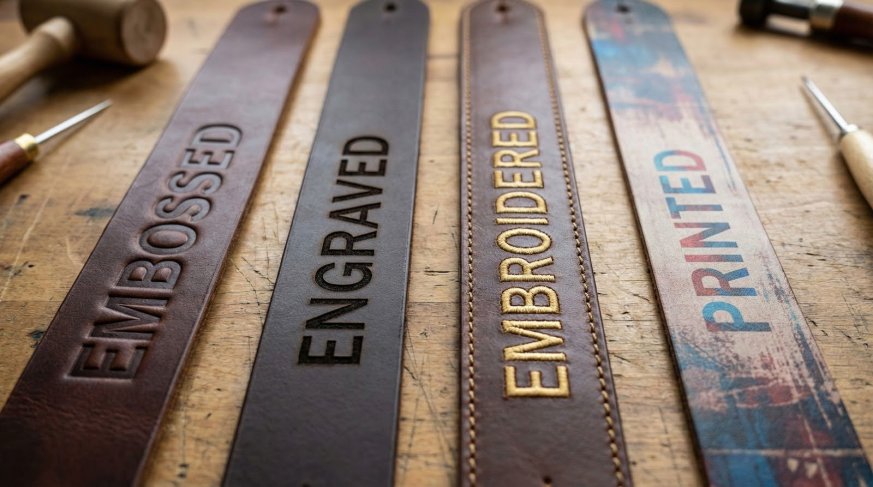
Match the finish to both your style and how hard you gig. Engraving and embossing merge with the leather itself, while embroidery and printing pop visually but show wear sooner.

Comfort matters. Wider straps—about 3 in (7.6 cm)—spread the load of a heavy Les Paul or bass and spare your shoulder on long sets. Padding helps, though a soft suede or microfiber lining often feels just as plush without extra bulk. Most quality straps adjust from 45 to 60 in (114 to 152 cm); taller players may need an extra-long option.

Style still counts. Decide whether you want vintage tooled western vibes, a sleek modern monogram, or a neon graphic that screams from the stage. Your strap will draw eyes, so make sure the look fits your musical persona.

Finally, balance price and lead time. Plan on $30–$60 for a ready-to-ship embroidered strap, $100-plus for boutique hand-tooled leather, and a wait of one to eight weeks depending on the artisan’s queue. Order early if a birthday gig or tour launch is circled on the calendar.

With these checkpoints locked in, you’ll breeze through the product profiles and choose a strap that feels tailor-made the moment you buckle it on.

1. Country Brook Craft Supply: build-it-from-scratch freedom

If you already have a strap sketched in your head—colors chosen, logo placed, maybe a repeating pattern—Country Brook helps you turn that concept into reality.

Country Brook has spent more than 21 years refining its process for dye-sublimated webbing and custom straps. Its Custom Design Straps and Webbing page lists over 20 sewing machines and monthly capacity of roughly 150,000 yards of sublimated webbing, so a single guitar strap is an easy lift—and even matching sets for a tour hardly dent the schedule. You upload artwork or text, pick the base material (nylon, cotton, polyester, or leather), and their team prints or laser engraves it with pro-grade equipment.
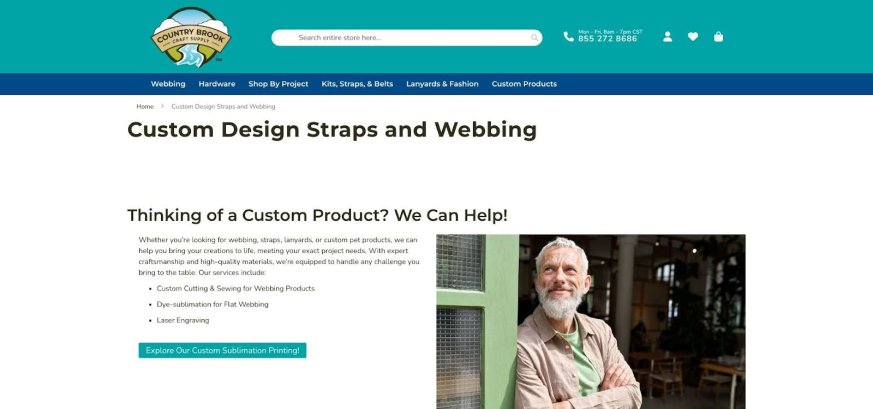
Country Brook custom guitar strap design and webbing production page screenshot

Because everything happens under one roof, quality stays high. Heavy-duty stitching, reinforced ends, and load-bearing hardware come standard, so the strap feels stage-ready out of the box.

Prices are quoted per project. A simple printed nylon strap often lands around $40–$60, while a leather build with engraving typically starts near $90. Turnaround varies with artwork complexity but usually beats small artisan shops, making Country Brook ideal when you need matching straps for a tour or just one that looks exactly like the design in your mind.

2. Art Tribute 3 in personalized strap: quick, affordable, gift-ready

Need a custom strap by next weekend and don’t want to drain the gear budget? Art Tribute’s embroidered leather option solves both problems.

The strap arrives soft and padded, measures 3 in (7.6 cm) wide, and comes boxed for gifting. At checkout you enter a name—up to 12 characters—and choose a thread color. Automated embroidery stitches crisp lettering that pops against classic black or brown leather, achieving a custom-shop vibe without the wait.

Art Tribute personalized 3-inch embroidered guitar strap product page screenshot

The extra width and padding balance heavier electrics. Length adjusts from 37 to 62 in (94 to 157 cm), so players of nearly any height find a comfortable spot. Art Tribute also includes strap locks, buttons, and picks, turning a roughly $45 purchase into a full accessory kit.

If you’re buying a first personalized strap, or matching straps for the whole band, this model delivers style fast while keeping costs low.

Step on stage and, before the first chord rings out, eyes lock on the strap draped over your shoulder. It’s more than a safety harness—it’s a billboard for your style. Custom names, logos, even album art now cover premium hides, turning a humble accessory into a storytelling tool fans notice from the back row. This guide shows you how to pick leather that won’t crack mid-tour, what each personalization method does to looks and longevity, and which nine makers deserve your money in 2026. Let’s find the strap that feels like it was built for you.

How to choose a personalized leather strap

A few key facts prevent the heartbreak of a cracked strap mid-tour.

First, check leather grade. Full-grain (or at least top-grain) keeps the hide’s natural fiber structure intact, so it flexes without tearing and ages into a rich patina. Lab tests and decades of player experience agree: a well-conditioned full-grain strap can last 30–50 years, outliving bonded leather that flakes in five or fewer, according to Szoneier Leather’s comparison of full-grain vs. genuine leather.

Next, pick a personalization method:

  • Embossing presses letters into the hide for a subtle, peel-proof finish.
  • Laser engraving burns artwork in with pinpoint accuracy and a darkened edge.
  • Embroidery stitches thread on top of leather, adding color and texture.
  • Printing lays full-color art over the surface, perfect for photos or graphics.

Match the finish to both your style and how hard you gig. Engraving and embossing merge with the leather itself, while embroidery and printing pop visually but show wear sooner.

Comfort matters. Wider straps—about 3 in (7.6 cm)—spread the load of a heavy Les Paul or bass and spare your shoulder on long sets. Padding helps, though a soft suede or microfiber lining often feels just as plush without extra bulk. Most quality straps adjust from 45 to 60 in (114 to 152 cm); taller players may need an extra-long option.

Style still counts. Decide whether you want vintage tooled western vibes, a sleek modern monogram, or a neon graphic that screams from the stage. Your strap will draw eyes, so make sure the look fits your musical persona.

Finally, balance price and lead time. Plan on $30–$60 for a ready-to-ship embroidered strap, $100-plus for boutique hand-tooled leather, and a wait of one to eight weeks depending on the artisan’s queue. Order early if a birthday gig or tour launch is circled on the calendar.

With these checkpoints locked in, you’ll breeze through the product profiles and choose a strap that feels tailor-made the moment you buckle it on.

1. Country Brook Craft Supply: build-it-from-scratch freedom

If you already have a strap sketched in your head—colors chosen, logo placed, maybe a repeating pattern—Country Brook helps you turn that concept into reality.

Country Brook has spent more than 21 years refining its process for dye-sublimated webbing and custom straps. Its Custom Design Straps and Webbing page lists over 20 sewing machines and monthly capacity of roughly 150,000 yards of sublimated webbing, so a single guitar strap is an easy lift—and even matching sets for a tour hardly dent the schedule. You upload artwork or text, pick the base material (nylon, cotton, polyester, or leather), and their team prints or laser engraves it with pro-grade equipment.

Country Brook custom guitar strap design and webbing production page screenshot

Because everything happens under one roof, quality stays high. Heavy-duty stitching, reinforced ends, and load-bearing hardware come standard, so the strap feels stage-ready out of the box.

Prices are quoted per project. A simple printed nylon strap often lands around $40–$60, while a leather build with engraving typically starts near $90. Turnaround varies with artwork complexity but usually beats small artisan shops, making Country Brook ideal when you need matching straps for a tour or just one that looks exactly like the design in your mind.

2. Art Tribute 3 in personalized strap: quick, affordable, gift-ready

Need a custom strap by next weekend and don’t want to drain the gear budget? Art Tribute’s embroidered leather option solves both problems.

The strap arrives soft and padded, measures 3 in (7.6 cm) wide, and comes boxed for gifting. At checkout you enter a name—up to 12 characters—and choose a thread color. Automated embroidery stitches crisp lettering that pops against classic black or brown leather, achieving a custom-shop vibe without the wait.

Art Tribute personalized 3-inch embroidered guitar strap product page screenshot

The extra width and padding balance heavier electrics. Length adjusts from 37 to 62 in (94 to 157 cm), so players of nearly any height find a comfortable spot. Art Tribute also includes strap locks, buttons, and picks, turning a roughly $45 purchase into a full accessory kit.

If you’re buying a first personalized strap, or matching straps for the whole band, this model delivers style fast while keeping costs low.

3. StrapGraphics custom straps: your art, front and center

Some players want more than a name; they want the whole strap to double as album art. StrapGraphics makes that possible with an online builder that feels like a design app for guitarists.

Upload a photo, layer text, adjust colors, and preview the result in real time. The company then prints the design edge to edge on durable polyester or leather, sealing the colors so they resist fading under stage lights.

StrapGraphics custom guitar strap designer and printed strap gallery screenshot

Choose bright vegan poly webbing for maximum color vibrancy, or select a leather base for a traditional feel with a printed top layer. Either way, sturdy leather ends keep the strap secure gig after gig.

Plan on spending $60–$100 and waiting two to three weeks while your creation travels from the Oregon workshop to your doorstep. For bands rolling out new artwork or solo artists who want lyrics visible before the first chord, StrapGraphics turns a strap into a moving billboard.

4. Double Treble: embroidery built to tour

Double Treble feels like stepping into a custom suit shop, except the tailor plays guitar and knows where straps fail after a year on the road. Each order starts with thick, vegetable-tanned leather that smells like a new amp and breaks in like favorite boots.

Personalization happens with thread, not lasers. Choose bold block letters or ornate script, pick colors from mild to wild, and let the shop stitch your name or logo flush with the leather so nothing snags on stage clothes or cable runs.

Function matches the showpiece look. The broad shoulder segment, roughly 3 in (7.6 cm) wide, plus optional padding, keeps a heavy bass balanced. Precise length slots land your instrument exactly where you like it, avoiding awkward between-hole compromises. Hardware and stitching are tour-grade; players report straps still going strong after hundreds of load-ins.

Plan to spend $110–$150 and wait two to four weeks while the small U.S. team finishes your strap. If you are done replacing bargain options every season, Double Treble delivers a piece that will age alongside your set list.

5. Leathersmith Designs: top-shelf craft for a lifetime of gigs

Picture the scent of a vintage guitar shop—aged mahogany and worn leather. That vibe arrives in every Leathersmith box.

The process starts with full-grain cowhide thick enough to stop a pick in flight, then adds a lining of soft garment leather or optional memory-foam padding. Every letter or motif is carved, inlaid, or tooled by hand; no rushed laser shortcuts, so the design settles into the hide like a tattoo.

Leathersmith Designs hand-tooled full-grain leather guitar strap official product photo

Customization is wide open. Want initials in contrasting burgundy, a scroll of western tooling along the edges, and conchos that match your Telecaster? Their script, inlay, and classic series offer templates, yet the shop still welcomes one-off ideas.

Expect to invest $150–$250 and wait three to six weeks while the Canadian team finishes your strap. Slip it over your shoulder and the leather molds to you, softening show after show until it feels invisible.

For players who see gear as a long-term partner, Leathersmith delivers a strap you will retire with, not replace.

6. Brookwood Leather: vintage western soul, built like a tank

If your playlist leans toward Bakersfield twang or ’50s rockabilly, Brookwood Leather fits right in. Each strap looks lifted from an old honky-tonk wall: hand-tooled floral borders, rich saddle browns, and optional conchos that catch stage lights. Most builds measure about 2.75 in (7 cm) wide, a comfortable span for electric guitars and basses.

The craft stays old-school. One artisan cuts, tools, dyes, and stitches every piece, then sizes it to your preferred playing height. You can add your name carved into the center panel or stamped near the tail, paired with a classic buckle or lace adjustment that completes the vintage vibe.

Two layers of vegetable-tanned leather are stitched together, so the strap rests supple on your shoulder yet refuses to stretch out of shape. Gig for years and it only looks better, the tooling darkening as sweat and stage dust settle into the grooves.

Pricing lands around $100–$150, depending on complexity, and the lead time runs a few weeks to a couple of months, especially near the holidays. The wait pays off if you want a strap that earns compliments before you even plug in.

7. Jodi Head name straps: loud, proud, and born in NYC

Some accessories whisper; Jodi Head straps shout your name in block letters tall enough for the cheap seats. Handmade in a Lower East Side workshop, they have ridden shoulders from Springsteen to tiny Brooklyn stages with the same unapologetic confidence.

Customization stays simple yet bold: up to eight leather letters in a strong, all-caps font stitched onto a contrasting base. Add stars, lightning bolts, or music-note icons at each end if you want extra flair. The result stands out under stage lights and camera flashes, delivering instant name recognition.

Jodi Head custom name guitar straps page screenshot with bold block letters

Behind the flash is serious build quality. Thick leather, soft garment backing, and precise stitching handle nightly sweat and cable snags, while a 2.5 in (6.4 cm) width eases shoulder strain. Break it in like a new pair of boots, then forget it is there.

Lead time runs about one to two weeks, and prices typically range from $160 to $220 depending on extras. For performers who want the crowd to remember their name before the first chorus, Jodi Head delivers attitude on arrival.

8. Holtz Leather “The Legend”: a strap that tells a story

Holtz Leather treats gear like future family hand-me-downs. Each strap starts with full-grain American hide, cut to a generous 2.5 in (6.4 cm) width and already carrying that vintage guitar-case scent. Set it on your shoulder and the workmanship is obvious.

Personalization stays understated. Holtz can laser engrave or hand emboss the name you choose, often the guitar’s nickname, low on the strap so it peeks out but never distracts. The lettering sits deep and permanent, offering a subtle signature that catches light at the right moment.

Comfort improves with every show. The thick leather softens, edges round off, and the strap molds to your shape like a well-worn glove. There is no extra padding, just honest material that breaks in, not down.

Plan on spending about $120–$160 and waiting two to three weeks. Each strap arrives boxed for gifting with a card that shares the “Legend” story. Present it to a graduating music student, a touring partner, or yourself on album-release day; the sentiment feels as solid as the build.

9. Ozark Mountain Leather: handmade charm, Etsy ease

Ozark Mountain blends small-shop skill with the simplicity of an online cart. Browse the listing, pick one of three leather colors, choose from five fonts, and add up to ten letters plus a decorative stamp. In minutes you lock in a design that a single maker will hand-tool, dye, and sew in rural Missouri.

At 2.75 in (7 cm) wide with a suede back, the strap hugs your shoulder without sliding. Two stitched layers, never glued, keep the body from stretching while the surface ages into a mellow patina. Customers often open the box and feel they bought a strap worth far more than the roughly $90 price tag.

Turnaround runs three to four weeks most of the year, and the shop posts weekly production updates so you know exactly where your order stands. Need multiple straps—matching names for a wedding band, for example? Bulk discounts apply automatically.

For players who love handmade goods but want to skip long custom-shop email threads, Ozark Mountain delivers a personal, gift-ready strap with just a few clicks.


 

Credit Score 101: Myths Vs. Facts You Need To Know

Credit Scores: Small Number, Big Impact

A credit score summarizes how a person has handled credit accounts over time. Lenders and other decision-makers use it to estimate the likelihood that someone will pay obligations as agreed.

Because the score is built from report data, misunderstandings can lead to mistakes. Separating myths from facts keeps attention on what matters most.

In Short: Most improvements come from steady habits, not dramatic moves.

Myth Vs. Fact: What a Credit Score Really Measures

Myth: A credit score measures personal character. Fact: It is a statistical snapshot based on credit-report information, not a judgment about someone’s value.

Some myths treat a credit score as permanent, but it can change as quickly as classic 777 slots when new data is reported.

Credit Score Ranges and “Good” Benchmarks

Many people assume there is one universal cutoff for a “good” score. In practice, models differ, and lenders set different standards for different products.

Instead of chasing one number, track the direction of change and what likely drove it. That makes it easier to spot patterns worth fixing.

Tip: Compare scores only when the source and model are the same.

Where the Data Comes From (and What Doesn’t)

Scores are built from credit-report data like payment history, revolving balances, and account age. They are not built from income, job title, or the balance in a bank account.

This is why similar incomes can still pair with different scores. The score mostly reflects on-time payments and how heavily available credit is used.

Often Included in Credit ReportsNot Used in Most Score Formulas
On-time and late paymentsIncome or salary
Credit card balances and limitsBank account balances
Account age and mixMarital status

Common Myths About Checks, Cards, and Closing Accounts

Confusion often comes from mixing up “soft” checks (like checking a personal score) with “hard” inquiries tied to new applications. Another myth is assuming a zero balance is always best, without thinking about utilization.

These quick reminders keep routine decisions in context. They can prevent overreacting to normal score changes.

  • Myth: Checking a personal credit score lowers it.
  • Fact: Reviewing personal credit information is typically a soft inquiry and does not affect the score.
  • Myth: Closing old cards always helps.
  • Fact: Closing an older account can reduce available credit and shorten average account age, which may lower a score.
  • Myth: Carrying a balance builds a score faster.
  • Fact: Carrying a balance is not required to build credit history, and higher revolving balances can increase utilization.

What Actually Moves the Number

Credit scoring formulas vary, but most lean on the same core categories. Understanding the categories is more useful than chasing a single shortcut.

Payment History Still Leads

Late payments can have an outsized effect because they signal missed obligations. Reminders or autopay for minimum payments can help prevent accidental slips.

Credit Utilization Is About Ratios

Utilization looks at how much revolving credit is used compared with available limits. Lower utilization is generally better, especially when it stays consistent across months.

Time and Variety Matter

Older, well-managed accounts can support a stronger profile because they show longer patterns. A mix of account types may help, but only when they fit an actual need.

New Credit Has a Short-Term Effect

Applying for new credit can add hard inquiries and lower average account age. Those effects often fade with time when accounts are managed well.

Simple Habits That Beat Quick-Fix Promises

Many “instant boost” claims rely on half-truths, like the idea that one payment will transform a score overnight. In reality, credit-building is a pattern of steady consistency.

Practical steps include paying on time, keeping revolving balances manageable, and spacing out applications. Checking reports for errors can also help, since inaccurate items can drag a score down.

Checklist: Pay on time, keep utilization low, and review reports for mistakes.

Bottom Line: Focus on What You Can Control

Credit scores respond to information that can be updated, so “secret rules” tend to disappoint. The clearest path is usually the simplest: pay on time, use credit lightly, and give good habits time to work.

For personalized help, a nonprofit credit counselor or a trusted financial professional can explain options and tradeoffs. Checking reports regularly also makes it easier to spot identity-theft issues early.

How Media Coverage Helped Sweepstakes Casinos Go Mainstream

From Niche Hobby to Headline Topic

Sweepstakes casinos used to be something many people only heard about in niche forums and chat groups. Over the last few years, they started showing up in broader stories about online entertainment, app policies, and state-by-state rules. Once a topic hits regular news feeds, new readers look for simple answers and clear definitions.

That is where media coverage matters most: it turns inside jargon into plain language and sets expectations for how the category works. It also puts the spotlight on both the fun, social side and the questions that come with fast growth.

In Short: More coverage meant more people understood the basics. That made it easier for the category to reach beyond early adopters.

Explainer Journalism Made the Model Easier To Understand

Early headlines often treated sweepstakes casinos as a confusing “loophole,” which left readers unsure what they were looking at. As more reporters published explainers, the conversation shifted toward concrete details like “no purchase necessary” entry options, dual-coin systems, and where the official rules live.

Once those explainers started pointing to real examples, it became easier for curious readers to check claims for themselves. For instance, the American Luck online casino homepage shows how Gold Coins and Sweeps Coins are used, along with links to sweepstakes rules and key terms. That kind of transparency helps the category feel less like an insider secret and more like a product many people can evaluate.

Another change was consistency. When multiple outlets use similar definitions, readers can compare coverage instead of trying to translate every article from scratch.

The Story Angles That Pulled New Audiences In

Media attention did not grow in a straight line. It expanded because different story angles kept pulling sweepstakes casinos into wider conversations.

Legality, Compliance, and Consumer Questions

Coverage increasingly focused on how state regulators and lawmakers view sweepstakes-style platforms. Reports about cease-and-desist letters, proposed bans, and enforcement debates sparked new waves of searches.

Big Platforms and Ad-Policy Changes

Another driver was policy changes from major online platforms that control ads and distribution. When rules shift, the topic moves from trade press to mainstream tech and business coverage.

Social Media Amplified Traditional Coverage

News articles rarely stay on the page where they were published. Creators summarize them, viewers debate them, and algorithms push the most engaging clips to new audiences. That sharing loop can make a single explainer feel like a “trend” overnight.

  • Quick Summaries: Short videos translate long articles into a few key points.
  • Live Q&A: Viewers ask basic questions in real time, which forces clearer explanations.
  • Search Spikes: Viral posts send people to look up definitions and official rules.
  • Community Checks: Players compare notes about availability, age limits, and rule details.

Social sharing can also blur the line between reporting and promotion. Disclosures and source links matter, especially when an account is repeating claims without context.

How Headlines Changed What “Mainstream” Means

“Mainstream” coverage is not the same as “positive” coverage. Many of the biggest stories were driven by scrutiny, legal questions, or policy changes that affected visibility.

The practical impact is that readers now see more balanced reporting, with a clearer sense of what to check before trusting a claim. A quick way to read these stories is to notice the trigger and then look for the concrete “what changed” section.

Coverage TriggerWhat Readers Usually Learn
State bills or enforcementWhich jurisdictions are tightening rules and what language they use
Platform policy updatesHow advertising, app listings, or age gates may shift
Explainer or “how it works” featuresDefinitions, coin terminology, and the sweepstakes entry framework

What To Watch Next

Sweepstakes casinos are likely to stay in the news because the rules are still evolving and coverage tends to follow conflict. Expect more stories that compare state approaches, track enforcement actions, and explain new platform policies as they appear.

For readers, the safest approach is to treat headlines as a starting point, not a final verdict. Checking official rules, eligibility details, and clear disclosures can prevent misunderstandings.

Takeaway: Media coverage made the category easier to find. It also raised the bar for clarity and accountability.

CasinosAnalyzer Guides Players Toward Fair Play and Safe Casinos

Casino players often discover that fairness and safety are not guaranteed simply because a site looks professional or promotes large bonuses. Many platforms present polished marketing, but the reality behind their payout behavior, identity verification practices, and customer support can be far different. Players need a way to separate genuine reliability from surface-level promises.

CasinosAnalyzer fills that need by examining hard data, historical records, game environments, and operational patterns to reveal how casinos truly behave. Its team reviews licensing, dispute outcomes, game fairness indicators, and internal policy changes to create a clear picture of each casino’s trustworthiness. By doing so, CasinosAnalyzer guides players toward safe decisions and helps them avoid pitfalls that often cost money and time. Here, users can also access current free offers, including free chips, via the link https://casinosanalyzer.com/free-spins-no-deposit/free-chips

How CasinosAnalyzer Identifies Fair Casino Environments

Fair play begins with measurable evidence. CasinosAnalyzer studies thousands of data points to determine whether a casino maintains consistent payouts, transparent rules, and stable operational behavior. One of the core elements in its evaluation process is tracking long-term payout performance. A casino may claim to operate at a competitive RTP range, but these advertised values often represent theoretical numbers rather than real operational averages. 

CasinosAnalyzer gathers monthly payout snapshots, compares them against historical records, and calculates fluctuations. If a slot category shows a drift from 96% toward 93% over a six-month span, CasinosAnalyzer highlights the trend so players understand what has changed. This type of detailed monitoring reveals whether a casino adjusts its game availability to affect expected returns.

Game fairness requires deeper attention. Providers often release updated versions of slots that alter volatility or prize distribution. CasinosAnalyzer conducts controlled test sessions to document how a game’s behavior aligns with published specifications. If real-world results deviate significantly from expected hit frequency or bonus round probability, that discrepancy becomes a warning sign. Players benefit because they gain insight into how transparent the casino is about its game offerings.

Fair environments also depend on clear dispute handling. CasinosAnalyzer examines complaint patterns, response times, and whether a casino consistently resolves issues within reasonable timeframes. When a casino handles identification checks within 24 hours and payouts within 48 hours, the stability is visible. When delays stretch across weeks, CasinosAnalyzer documents them and adjusts trust scores to reflect real performance, not promotional claims.

This approach ensures players know exactly what type of environment they are entering. Instead of relying on generic labels like “fair” or “reputable,” CasinosAnalyzer backs every conclusion with measured behavior.

How CasinosAnalyzer Helps Players Avoid Unsafe Casinos

Unsafe casinos do not always appear dangerous on the surface. Many operate with enticing bonuses, modern interfaces, and aggressive advertising. The real risks become visible only when players attempt to withdraw, dispute a charge, or check a casino’s licensing legitimacy. CasinosAnalyzer analyzes safety risks by correlating data from regulatory reports, user complaints, payout time records, and historical policy changes.

One of the strongest indicators of unsafe behavior is inconsistent cash-out performance. CasinosAnalyzer maintains statistical withdrawal timelines based on verified user submissions and internal tests. In 2024, casinos with a high incidence of stalling requests averaged payout delays of 96 to 160 hours, while stable casinos processed standard withdrawals within 6 to 30 hours. This contrast helps players identify sites likely to withhold funds or complicate the verification process.

Support behavior further exposes unsafe platforms. CasinosAnalyzer performs live scenario tests to evaluate how support teams respond to urgent issues such as locked accounts or deposit reversals. Casinos with evasive or contradictory answers often correlate with poor dispute outcomes. Players benefit from knowing which casinos treat problem resolution seriously and which avoid responsibility.

CasinosAnalyzer protects players by presenting this information in plain language supported by reliable data. It prevents users from entering risky situations by showing warning signs that most players would not identify independently. In a market filled with misleading claims, this protection becomes invaluable for safe play.

How CasinosAnalyzer Promotes Transparency and Real Accountability

Transparency and accountability are essential for long-term trust. CasinosAnalyzer promotes both by documenting how casinos evolve over time rather than presenting a static snapshot. Casinos frequently adjust bonus policies, payout terms, and withdrawal limits, sometimes without explicit announcements. CasinosAnalyzer monitors these changes by comparing archived policy versions, tracking player reports, and maintaining a chronological record of modifications. When a casino reduces its withdrawal limit from $5,000 to $1,500 or introduces new identification rules, the shift is added to its public profile.

Payout tracking enhances accountability. CasinosAnalyzer compiles verified payout durations from a large data pool. Because this data is updated continuously, players see whether a casino is improving or deteriorating. For example, a casino that processed payouts in under two hours in early 2023 but expanded processing time to twelve hours in late 2024 signals operational pressure or internal restructuring. By presenting these trends, CasinosAnalyzer empowers players to choose casinos that maintain consistent standards.

Importantly, casinos cannot manipulate or purchase adjustments to their ratings. CasinosAnalyzer’s policies prevent operators from influencing the outcome of reviews. If a casino requests a correction, the platform verifies the claim through regulatory documents, payment provider confirmations, and technical logs before making any update. This strict verification protects the player and ensures that accountability remains genuine and measurable. Key elements that support transparency and accountability:

  • Continuous tracking of changes in bonus terms, payout rules, and withdrawal limits
  • Archiving and comparing historical policy versions for each casino
  • Recording player reports in chronological order to identify patterns
  • Monitoring operational shifts such as new ID requirements or lowered withdrawal caps
  • Compiling verified payout durations and displaying performance trends
  • Detecting improvements or declines in casino processing speed over time

Through these methods, CasinosAnalyzer turns transparency into a practical advantage for players who seek safe, predictable casino experiences.

How Leather Defines the Value of High-End Bags

Value has never been the question of price in the realm of luxury bags. Instead, it is an overall vision created with the help of materials, craftsmanship, design, and brand philosophy. In this system, leather is not merely a raw material that is utilized in making the bag but it is a matter of life and death that defines the position of the products, brand reputation and market identification. The value of a bag to a large extent is characterized by leather.

High-End Bags Begin with Premium Leather

The initial perception of a high-end bag by a consumer can be determined by touch and sight. Leather is the closest and most compelling medium of value. These leathers are usually of rare and well-managed areas throughout the globe: e.g. French calfskin, with a fine and soft grain and evenly spread pores, or vegetable tanned leather of Italy, smoothed with natural vegetable tannins that form an amber hue of the leather over time. 

These leathers have slight variations on top of their unique textures, feeling and natural luster. It is this personalized nature that makes each bag appear to have a non-replicability. The material evolution of leather as compared to the uniformity of synthetic materials is more likely to conform to the ideas of sophistication, luxury, and quality. To the high-end customers, leather does not just constitute a material option, it is a way of life and a statement of individual principle.

Leather Determines a Bag’s Lifespan and Long-Term Value

Leather has natural benefits in the aspects of durability and longevity. The leather is of good quality, which incorporates the quality of durability with strength, and when well taken care of, over time, it has a peculiar patina that adds aesthetic depth to the bag. A leather bag can still bring out new layers of beauty even many years after being used. The process of aging contributes to the concept of long-term companionship and enables the bag to be used as a source of individual narratives. 

Commercially, the extended lifecycle of the product will result in an increase in value, reduced replacement rates, and an attachment to consumers. A bag that can be worn over many years or even make a signature of personal items usually becomes a very strong source of brand loyalty. This is why most custom bag manufacturers focus more on the practicality and the timeless nature of their products rather than the temporary nature of their trends when designing them.

Leather as the Foundation of High-End Craftsmanship and Design

The flexibility and moldability of leather allow the designers and craftsmen to achieve complicated forms and elegant details in a very accurate manner. Outstanding tanning and manufacturing processes also increase the price of leather. Expensive leathers can be tanned over months; vegetable tanned leather can take several months to tan, including soaking, drying, and curing of the leather to remove impurities without losing the strength and breathability of the leather. 

Consequently, leather behaves in the same way during the entire production process, be it in three dimensional fittings, smooth edgework, or the purity of stitch density. The high quality leather enables designers to go beyond the rigidity of formal constraints in cutting, stitching and shaping, and to create creative ideas into viable and lasting products. 

An excellent case in point is the saddle stitching method by Hermes that not only increases the structural resistance but also eliminates deformations that develop with tension with the time. This philosophy of making bags based on material is one which completely unites the physical qualities of leather with the practical needs of a bag and makes each expensive bag actually an irreplaceable masterpiece of the art.

Leather as a Core Driver of Brand Premium

High-end bags also have high culture and brand value by leather. Cost is never the sole factor in market pricing, but it would be a measure of how much consumers perceive and believe in the overall value in a brand. Leather is one of the most critical and technically oriented components, as a result, it will aid the development of brand premium. 

By gaining a sheer understanding of leather choice and use, brands create iconic textures and identities. Chambers of caviar leather such as Chanel, has become synonymous with its ability to withstand time and wear (durability and structure) and Louis Vuitton monogram canvas (despite being made of canvas) gets the same leather-like feel and strength with specific coating techniques. 

In the case of Synberry, a company producing professional bags, the sourcing of leathers, tanning, standards of materials, and extreme attention to details are the basis of brand culture and technical credibility. In case such information is relayed to the market clearly and in a transparent manner, consumers would be more willing and ready to appreciate the logic behind premium pricing. Leather is therefore the key between the product functionality and brand culture enabling the bags to rise above the current use and be associated with identity and taste.

Leather’s Renewed Value in the Age of Rational Consumption

The luxury of leather in luxury bags is being renegotiated as the consumer is more rational in his/her behaviour. Premium leather bags because of their durability, repairability, and long life are more compatible with sustainable values like long life use and minimized waste compared to synthetic alternatives that are disposable and have short lifespans. 

An increased number of luxury brands are now focusing on traceable sources of leather, environmentally conscious tanning methods and long-term maintenance services. The practices are not only a reaction to the increasing sustainability issues but also a demonstration of the changing role of leather in the future of luxury consumption.

Leather Elevates Brand Positioning

In a larger sense, leather determines not only the worth of particular products but also the height and the personality of a brand. A brand that has a confident and well-trained sense of the leather choice, craftsmanship, and the value it should have in the long term will have a greater chance of making a stable and sustainable presence in the high-end market, which is becoming a highly competitive one. 

The style of design is copyable, and the methods of marketing can be copied, but even profound knowledge of leather and long-term investment in the quality of materials will be hardly covered in the nearest future. That is exactly why a lot of high-end brands succeed and can survive on the market cycles and become the branches with the long-term growth. Leather is the value of the high-end bags not in terms of high prices, but in terms of rightness, respect to materials, trust to time and devotion to emotion. 

Although imitation leather is made in synthetic materials, it has long since passed imitation to become eternal in real leather. Every touch is a confirmation of ownership: it is not just a bag that you own, but a breathing narrative, real, living, and deserving to be re-told. Leather is much more than an ingredient to brands that are indeed serious about the high-end market. It is a manifestation of values, long-term strategic vision and professionalism. 

Leather, with its unsubstitutable energy, still determines and enhances the worth of luxury bags, and returns the luxury industry to its most basic form of reality, which is that authenticity costs more than anything. 

Why Full Grain Leather Is the Most Authentic Material for Handmade Goods


In today’s world of fast production and synthetic materials, full-grain leather has become a symbol of craftsmanship, heritage, and quality. When searching for handmade goods that will last for decades, age beautifully, and carry a story, full-grain leather is the most authentic choice. This premium material offers durability, a timeless appeal, and a natural texture that both artisans and consumers appreciate. Before exploring its benefits, it’s important to understand what sets it apart from other leathers and why it continues to hold its value in modern craft culture.


Understanding What Makes Full-Grain Leather Unique


Full-grain leather is made from the strongest, most natural part of an animal’s hide. Unlike corrected-grain or split leather, full-grain leather is not sanded, buffed, or altered to hide imperfections. It retains its original texture, grain patterns, and natural marks. These details make each handmade product truly one of a kind. Since the grain remains intact, the fibers stay strong, giving full-grain leather exceptional durability and high resistance to wear.


Another reason this type of leather stands out is its ability to develop a patina. Over time, full-grain leather absorbs oils from your hands, reacts to sunlight, and changes with use. This patina becomes richer and more beautiful with age. This is one reason why leather enthusiasts and craftsmen prefer full-grain leather to synthetic or processed alternatives. The material reflects the lifestyle and habits of the person using it, making each item deeply personal.


Durability That Outperforms Alternatives


People choose full-grain leather for handmade goods because they want items that will last for years or even generations. Its tightly woven structure makes it resistant to stretching, cracking, and tearing. Full-grain leather maintains its shape and strength in bags, belts, wallets, and boots, even under daily stress. This long-lasting nature is exactly why many heritage brands rely on it for their signature products.


In contrast, corrected-grain or bonded leather often wears out quickly because it lacks the strong upper fibers that give full-grain leather its integrity. These synthetic or processed types can crack, peel, or fade, especially when exposed to moisture or friction. When compared side by side, the difference in quality is clear. Not only does full-grain leather perform better, it also becomes more attractive over time, a rare combination in the world of materials.


The Art of Craftsmanship and Authenticity


Handmade goods require patience, attention to detail, and an in-depth knowledge of materials. Full-grain leather is ideal for this type of craftsmanship because it lends itself well to traditional techniques such as hand-stitching, burnishing, and edge finishing. Artisans appreciate its natural softness and flexibility, which allows them to shape and design products without compromising their structure.


Full-grain leather is highly respected for its authenticity. Since the hide’s surface is untouched, the material feels real and organic. You can see and feel the natural variations that make each piece unique. These variations add character, reminding users that their item was not mass-produced. Instead, it is crafted with intention and built to last.


Why Consumers Prefer Full-Grain Leather in Modern Fashion


In today’s fashion world, consumers value sustainability and timeless design. They want products made from materials that won’t become irrelevant due to changing trends. Full-grain leather aligns perfectly with this mindset because it is both eco-friendly and long-lasting. Although full-grain leather may cost more upfront, its longevity makes it a more responsible and economical choice over time.


As fast fashion continues to dominate the market, people are becoming more selective about their purchases. They prefer quality over quantity and are willing to pay for goods that offer long-term value. Full-grain leather wallets, bags, and accessories often become wardrobe staples because they match any style and remain functional for years. Their classic appearance ensures they never go out of style, making them some of the few materials that age gracefully.


Beauty That Evolves Over Time


One of the most distinctive characteristics of full-grain leather is its ability to develop a natural patina over time. This process enhances the appearance and charm of handmade goods. Rather than looking worn out, full-grain leather improves with use. Its deepening tones, subtle marks, and smooth shine all contribute to its luxurious and authentic appearance.


For many leather enthusiasts, the patina is the main reason they choose full-grain leather. It reflects the product’s journey and the owner’s experiences. No two patinas will ever look the same. This personal aging process transforms a simple accessory into a meaningful item that holds memories and character.


A Short Note on Online Entertainment and Leisure


Many people enjoy exploring the beauty and authenticity of full-grain leather while taking short breaks with online entertainment. If you enjoy casual gaming, try to play sun and moon casino game for a fun and relaxing experience between work and hobbies. With its vibrant gameplay and lighthearted enjoyment, it’s no surprise that it’s a popular choice among users who want a quick mental refresh before diving back into creative or hands-on activities.


Closing Remarks


Full-grain leather is the gold standard for handmade goods because it exudes a sense of history, quality, and individuality. Its natural grain patterns, durability, and ability to develop a timeless patina are irreplaceable qualities. When artisans use full-grain leather, they create pieces that tell a story, evolve with their owners, and last for generations. As consumers increasingly value craftsmanship and sustainability, full-grain leather stands out as a material that embodies authenticity in every stitch.

Blockchain Advancements Reshaping the Future of Online Lottery Systems


Blockchain Advancements Reshaping the Future of Online Lottery Systems

Internet lotteries have emerged as one of the most popular types of online entertainment, which can provide millions of gamers around the world with an opportunity to take part in the draws without geographical limitations. 

The world of online lotteries is also in the process of a revolutionary transformation as a result of the emergence of blockchain technology. Blockchain brings in transparency, fairness, and security that traditional lottery systems are usually unable to offer.  The following are some of the most significant benefits related to the use of blockchain in online lotteries:

1. Availability and International Connectivity

Lotteries powered by blockchain technology offer a borderless experience, allowing players from all corners of the world to join seamlessly and make transactions using digital wallets and cryptocurrencies. Platforms like Klix4d are also exploring blockchain innovations to ensure that global participants can access lottery games with ease. 

As long as players have an internet connection, they can enjoy fair and secure draws without worrying about currency conversions or regional restrictions. This creates a truly international and inclusive playing field, making the lottery experience smoother and more enjoyable for everyone.

2. Transparency and Trust

The transparency that is created by blockchain technology in relation to online lotteries is one of the most significant advantages of the technology. Each transaction and draw is stored on an interconnected registry, and it is impossible to change or influence the result. 

Players are able to check results themselves, and this removes any concern of unfairness. Blockchain also provides participants with an opportunity to watch the process in real time, unlike the real-life situation with traditional lottery systems, where a person must rely entirely on the operator, therefore creating trust.

3. Security and Fraud Prevention

The issue of security is a significant concern in online gambling, and blockchain can be applied to solve this problem. The transactions are coded and stored in a variety of nodes; hence, they are resistant to hacks or fraud. 

Smart contracts make the process of conducting a lottery automatic, and the payouts are completed instantly and under specific conditions. It prevents possibilities of human error or manipulation. This translates to peace of mind on the part of the players.

4. Efficiency and Greater Quickness 

Traditional lottery mechanisms frequently require intermediaries to be involved, whether in the form of banks or payment processors, which may slow down operations and add extra expenses. 

Blockchain removes the necessity of these middlemen as it allows a peer-to-peer transfer. This translates to quicker payouts, as well as reduced transaction charges. 

Players also enjoy the convenience of having their winnings immediately processed rather than waiting days before processing their winnings. To the operators, lower overhead costs will mean that they will be able to offer bigger jackpots and other appealing rewards to the participants.

5. Variety and Innovation

The blockchain technology opens up an innovative lottery type. Decentralized applications (dApps) can be used to develop distinct lottery games, such as instant draw games and community jackpots. Gamers have a significant number of offers to play, and each has different odds and rewards. 

Blockchain provides the necessary flexibility to make lotteries more dynamic than in the traditional format, so that gamblers, both amateur and professional, can be interested in them. 

6. Social and Community Involvement

Paradoxically, both lotteries based on blockchain create a powerful communal feeling even though they are online platforms. The following features decentralized governance:

  • Voting on jackpot size
  • Voting on game rules
  • Voting on charitable contributions

Social functions such as chat rooms and live draws are also present to increase the interaction, which makes players feel involved. Competitions and games, Platforms like Klix4d are using blockchain to organize joint gaming events and competitions to unite participants. This is the feeling of brotherhood that is making lotteries not lone activities but group experiences.

Online lotteries are being transformed by blockchain as transparency, security, accessibility, and Innovation are equalized to form an all-powerful entity. Players will have the advantage of playing with peace of mind, knowing that the results are fair, transactions are secure, and that the winnings are obtained immediately.

What to Consider Before Mobile Casino Gaming


Online gambling has become more fun, flexible, and convenient. This is because of the introduction of mobile casino gaming. Gamblers can now enjoy a variety of games on tablets and smartphones from anywhere.

However, there are certain things you have to consider before embracing mobile gaming. These determine your experience as well as the success of your gambling adventures. Here are some of the factors to look at.

  1. Compatibility

For successful mobile gaming, your device should be compatible with the casino website. You should embrace or search for platforms that are optimized for handheld devices. This is because they will perfectly adjust to fit on your device’s small screen for a smooth gaming experience. 

Not only that, but most of their desktop features are also optimized to fit or be accessible on your mobile. Besides that, some casinos like YOI4D have embraced innovations and developed mobile apps. Ensure the app is compatible with your device before you download and install it. Most gambling websites provide links to their applications for installation on their websites. 

  1. Licensing and Regulation

Just like desktop platforms, mobile online casinos are also licensed and regulated by the responsible bodies. So, before considering any for your gaming action, ensure it holds an operating license. This shows that the platform’s operations are monitored and regulated to ensure they are safe for you.

Check the About Us section on the website, as it usually has the needed information about licensing. Embracing licensed mobile casinos saves you from dealing with illegal platforms that can steal both your money and personal data. They usually have the wrong intentions for you.

  1. Bonuses

The best online mobile casinos are highly generous. They have several exclusive bonuses for their customers, both new and existing. You should always check the bonus section of the platform before joining it. Only consider the site if it has several interesting offers in store for you.

You can also compare the various offers of different mobile casinos and choose one with the best. Luckily, you can check the bonus area of most platforms before signing up. This gives you a golden opportunity to first evaluate their offers. But don’t forget to read the bonus terms before claiming them.

  1. Game Selection

The game collection of a mobile casino is as important as that of the desktop platform. A reliable site to join should have a variety of games. This enables you to enjoy different tastes on each visit. You won’t have to be stuck with a few game selections all the time, as it may turn out to be boring. In fact, you can easily lose interest when you have to play the same titles regularly.

Check the game collection and evaluate its variety before you consider the platform. Another thing is that the quality of the games also matters. Ensure that the site has titles from top or reputable developers known for supplying the best games on the market.

  1. Payment Options

Deposits and withdrawals are also important in mobile casinos. This explains why you should check the payment options provided before joining the site. Ensure that it has the most effective options that deliver money fast at a lower cost. Delayed transactions can cause frustrations, and this is why you need a payment method that delivers your money instantly.

On top of that, it should have low service fees. This ensures that you get your deposits and winnings in full without heavy deductions. Only a small amount goes to clearing service fees.

For excellent mobile casino gaming, you need to choose a reliable platform. Websites like YOI4D are the best choice because they offer great services. These boost your overall experience on each visit.

3 Reasons Why Leather is an Excellent Fabric for Welding Clothing

Welders are exposed to extreme heat, molten metal, UV radiation, and physical impact every day. The clothing they wear isn’t just about comfort; it can prevent serious injury. Among all the fabrics available for personal protective equipment, leather has earned its place as the most trusted material for welding gear. There’s a reason leather has been the standard in welding for decades. From jackets to aprons, gloves to welding boots, this natural material offers better protection, lasts longer, and fits more comfortably than synthetic alternatives.

Here are three reasons why leather remains the top choice for welders who need gear that actually performs.

1. Leather Handles Heat and Flame Better Than Synthetics

The biggest advantage of leather in welding is its response to heat. Unlike synthetic materials like nylon or polyester, which can melt or ignite easily under high temperatures, leather holds up under intense heat without compromising protection.

Welding arcs can reach up to 6,500 degrees Fahrenheit. According to the Occupational Safety and Health Administration (OSHA), ambient temperatures in a welder’s workspace can still climb above 1,000 degrees, depending on the method used. Leather, particularly cowhide and pigskin, won’t melt when hit with sparks, making it one of the safest materials for welding applications.

That’s why most welding gloves and jackets use split leather (the layer underneath the top grain). It forms a thick barrier that shields the welder from radiant heat, hot slag, and spatter, preventing serious burns. Leather also offers some UV protection, which is essential given that welding arcs emit significant ultraviolet light that can damage skin over time.

Leather doesn’t need chemical treatments to resist flame. Its natural density and structure make it inherently protective, and it breathes better than treated synthetics.

2. Leather Lasts Longer Under Tough Conditions

Welding is tough work, and gear needs to hold up under punishing conditions. That includes exposure to grinding sparks, sharp materials, repetitive movement, and frequent bending or kneeling. Leather excels in this environment thanks to its rugged grain structure and tear-resistant properties.

Leather Outlasts Flame-Resistant Cotton

A study by the American Welding Society found that leather outperformed flame-resistant cotton by more than 3 to 1 in abrasion resistance tests and nearly 2 to 1 in puncture resistance. This makes it the better choice not only for jackets and gloves but also for heavy-duty gear like welding aprons and footwear.

Welding Boots Take a Beating

Quality leather welding boots can last multiple seasons under daily wear, particularly if made from full-grain leather with Goodyear welt construction (where the upper is stitched to the sole for added durability). These boots are designed to withstand high heat and heavy use while providing excellent foot support.

Synthetics Break Down Faster

Synthetics wear out faster. Budget-grade workwear often shows wear after just a few weeks or months of regular use. Fraying seams, melted fibers, and reduced protection all lead to premature replacement. Leather stands up to friction, heat, and daily abuse without breaking down quickly.

You Pay More Upfront, But Save Long-Term

Welders who buy solid leather gear pay more upfront, but it lasts longer and requires fewer replacements. That adds up to real savings over time.

3. Leather Flexes and Breathes Better Than You’d Expect

While safety is always the top priority, comfort matters when you’re working long hours on your feet or in awkward positions. Leather delivers on flexibility, fit, and breathability, especially when properly treated or broken in.

Modern Leather Moves With You

Modern tanning processes have evolved significantly, transforming leather into a more adaptable and breathable material. Unlike the stiff and heavy welding jackets of the past, today’s leather garments are designed with mobility in mind. Articulated elbows, gusseted shoulders, and lightweight leather blends provide a full range of motion without sacrificing protection.

Flexibility Helps With Precision Work

This is particularly important for tasks that require fine motor control, such as TIG (tungsten inert gas) welding, where dexterity is critical. Gloves made from goatskin or pigskin provide the flexibility welders need to maintain precise control while still offering substantial burn resistance.

Leather Helps Regulate Temperature

Leather regulates temperature better than many synthetic fabrics. It naturally wicks moisture and allows for ventilation, which is essential in hot work environments. Good ventilation helps reduce the risk of heat stress, one of the top job site hazards identified by the National Institute for Occupational Safety and Health (NIOSH). According to NIOSH, heat stress accounts for a significant share of workplace injuries in industrial trades, underscoring the critical role of breathable gear.

Welding Boots Mold to Your Feet

Leather footwear has an ergonomic advantage. Leather welding boots often mold to the foot over time, delivering a more personalized, stable fit than rigid synthetic alternatives. This can reduce fatigue, improve balance, and prevent slips when working on slick or uneven surfaces.


For welders who work on concrete floors, in outdoor yards, or in fabrication shops, boots need to do more than protect. They need to support all-day wear. The best welding boots combine full-grain leather with heat-resistant soles and steel toe caps for maximum comfort and protection.

What to Look for in Leather Welding Gear

Not all leather performs the same when it comes to safety and comfort. Here’s what makes a difference:


  • Split cowhide leather (the tougher underlayer) for jackets and aprons
  • Kevlar stitching for reinforced seams
  • Goatskin or pigskin for gloves (softer and more flexible)
  • Full-grain leather with Goodyear welt construction for boots
  • EH-rated outsoles (electrical hazard protection) and steel toe or metatarsal protection


Gear with these features protects better and lasts longer.

Final Thought

Leather has earned its reputation as the standard material for welding clothing thanks to its combination of safety, strength, and comfort. Whether you just started welding or you’ve been doing it for years, investing in quality leather gear, especially durable welding boots, can make a noticeable difference in both protection and productivity.


Welding doesn’t give you second chances. Sparks, heat, and heavy materials demand gear that can perform under pressure. Leather does just that, giving welders the confidence to focus on their craft without compromising safety or comfort.

For a deeper look at why quality gear matters across trades, Forbes has highlighted how improved PPE can improve workforce efficiency and long-term health outcomes in industrial roles.

The Benefits of Setting Limits to Keep Online Lottery Play Enjoyable

Online lottery platforms have grown a lot, and people enjoy the ease of playing from home whenever they feel like it. With so many options and exciting draws, it is easy to get fully caught up in the fun. The idea of setting limits may sound serious, but it actually adds comfort to the whole experience. 

When players know they are in control, they enjoy the game more and avoid the pressure that sometimes comes with chasing wins. The whole purpose of playing is to feel a little thrill on the side, not to worry about spending too much time or money. Limits keep the game light and enjoyable, which is exactly what most players want today.

Keeping the Excitement Natural

The thrill of online lottery play should feel natural. Players often enjoy the quiet moments of waiting for results or the tiny spark of joy when they see a match. But when someone plays without limits, the excitement can slowly turn into pressure. 

That is when the game stops being enjoyable. Setting soft personal boundaries keeps the fun feeling alive. It helps players return with the same energy each time rather than burning out.

A few small habits can maintain that healthy excitement.

  • Take short breaks between plays
  • Celebrate small wins without rushing for the next
  • Avoid comparing results with others

These little choices help maintain a positive mindset while keeping the entire experience balanced. Some platforms like Bingo4d make this even simpler by giving tools that help track progress, so the whole experience stays smooth.

Protecting Your Budget with Ease

The main benefit of setting limits is simple money control. Everyone has a different budget, and limits keep spending in a safe range without affecting other parts of life. 

When players decide how much they want to use before they start, the whole game feels lighter. There is no guilt or stress afterward because they planned. Many people feel more confident this way, and confidence makes the experience more enjoyable.

This practice also helps players focus on entertainment rather than chasing outcomes. They begin to appreciate the small moments instead of worrying about the next result. It creates a healthier relationship with the game, one that can last longer and stay trouble-free.

Avoiding Emotional Decisions

Fun gaming comes from a calm mind. Emotional decisions often happen when someone plays for too long or spends more than they planned. Once emotions take over, the entertainment turns into frustration. That is why limits matter so much. They help players pause, breathe, and step back before reacting.

When players stick to limits, they avoid the common issues like hurrying into another play or trying to win back what they lost. The experience becomes more stable and enjoyable. 

People find themselves appreciating the game again rather than feeling trapped by it. Emotional balance is one of the biggest advantages of responsible play, and it often leads to better choices overall.

Encouraging Long-Term Enjoyment

Many players want to enjoy online lottery games for a long time, not just once or twice. Limits help create lasting fun. When players treat the game as a small hobby instead of a constant activity, it stays exciting. The anticipation builds naturally, and the entire process feels more meaningful.
It also helps players create memories instead of stress. They remember the good moments, the tiny wins, and the fun conversations with friends who play too. A long-term experience should always feel steady and positive, and limits make that possible for everyone who wants to enjoy the game responsibly.

A smooth and enjoyable lottery experience depends on steady control, simple boundaries, and a mindset focused on entertainment. With platforms like Bingo4d, players can enjoy online lottery play with ease and confidence. Limits turn the whole experience into something that stays fun, light, and truly enjoyable for anyone who wants to keep the excitement alive.