
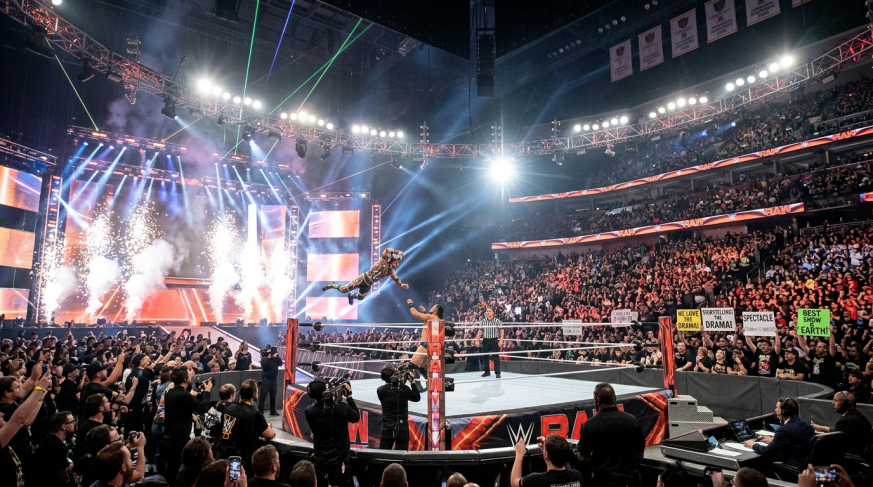
Almost every WWE fan knows the winners are chosen before the bell rings. Yet arenas still fill up, and weekly shows draw huge audiences around the world. To outsiders this looks strange: why watch a contest with a predetermined outcome? The answer is that WWE isn’t selling a contest at all. It’s selling a story, performed by athletes who take very real physical risks.
From Kayfabe to Sports Entertainment
For decades wrestling protected “kayfabe”, the unwritten rule that everything inside the ring had to be presented as real. That changed in 1989, when WWE, then the WWF, told New Jersey regulators that its shows were entertainment rather than competitive sport. Viewers who follow fights through streaming apps, sports news and platforms such as https://parimatch.com/en/crypto-casino usually expect an open result, but WWE fans accept the script from the start. The company even uses its own label for the product: sports entertainment.
Why the Script Doesn’t Ruin the Show
Fans compare WWE to a stage play or an action series. Nobody stops watching a film because the ending was written in advance. What keeps people hooked is how the story is told.
- Characters. Heroes and villains, known as faces and heels, give every match an emotional reason to care.
- Long storylines. Rivalries can build for months before paying off at a big event.
- Surprises. Returns, betrayals and title changes create moments fans discuss for years.
- Athleticism. The outcome is planned, but the strength, timing and falls are real.
Did you know? In his 1957 essay “The World of Wrestling”, French philosopher Roland Barthes argued that wrestling is a spectacle of excess, closer to theatre than to boxing, and that fans enjoy it precisely for its clear, exaggerated drama.
Scripted, but Not Fake
The word “fake” annoys wrestlers for a reason. Performers work through injuries, travel constantly and take hard bumps on the mat night after night. Concussions, broken bones and surgeries are part of many careers.
| Aspect | Scripted | Real |
| Match result | Yes | No |
| Storylines and promos | Yes | No |
| Physical impact | No | Yes |
| Injuries | No | Yes |
A Global Media Business
WWE’s approach clearly works commercially. In 2023 it merged with UFC’s parent company to form TKO Group, putting staged and real combat under one roof. Its flagship show Raw moved to Netflix in January 2025 under a deal widely reported at around 5 billion dollars over ten years. Big events such as WrestleMania regularly fill stadiums.
Conclusion
WWE fans don’t watch to find out who is stronger. They watch to see how a story unfolds, how characters react and how athletes turn a plan into a memorable night. That mix of planned drama and real risk is something no other sport offers in quite the same way.