
Most leather sneakers are sold on the look of the upper: the color, the shape of the toe, the line of the stitching. The tanning method behind that upper gets far less attention, yet it decides how the shoe feels on the first day, how it handles rain, and what it looks like after two years of regular wear.
Two methods dominate the industry: vegetable tanning and chrome tanning. Both turn a raw hide into stable, durable leather, but they get there by different routes and leave very different materials behind. For anyone choosing a pair of leather sneakers, the difference is worth understanding before the price tag does the deciding.
What Tanning Does to a Hide
A raw hide is mostly collagen, a protein that rots when wet and turns hard and brittle when dry. Tanning binds those collagen fibers into a stable structure, so the material stays flexible and resists decay. Before that, the hide is salted, soaked, limed, and dehaired, a sequence explained step by step in this guide to how a hide becomes leather. The tanning agent is where the two paths split.
Vegetable Tanning: Slow, Firm and Built to Age
Vegetable tanning uses tannins drawn from plant material such as chestnut wood, oak bark, mimosa, and quebracho. In traditional pit tanning, hides move through a series of vats with gradually stronger tannin solutions over several weeks. Modern drum methods shorten the process, but it still takes far longer than chrome tanning, and Tuscany remains one of the best-known centers for it.
The result is a firmer, denser leather with a warm natural tone and an earthy smell. Its open fiber structure absorbs oils from handling and darkens with light and use, which is how vegetable-tanned leather develops a patina. Scuffs and creases become part of the surface rather than damage to it.
That aging is the main reason vegetable-tanned leather appears most often on sneakers meant to be worn for years rather than replaced every season. Some makers pair it with hand finishing to bring out depth in the grain.
J.C.LUTZ, a Paris-born brand that produces in a family-run atelier in Le Marche, Italy, builds its vegetable-tanned leather sneakers from full-grain leather that arrives from the tannery already vegetable-tanned. Each upper is then hand-painted at the atelier as a separate finishing step, so the color keeps developing as the leather is worn.

Hand-painted, vegetable-tanned full-grain leather: the tone deepens with light, handling and wear. Photo: J.C.LUTZ.
The trade-offs are real. Veg-tan leather is stiffer at first, more prone to water spots and less colorfast than chrome-tanned leather. Its color range is also narrower, because the natural tone of the tanned hide shows through lighter dyes.
Chrome Tanning: Fast, Soft and Consistent
Chrome tanning uses chromium(III) sulfate in large rotating drums. In use since the late 19th century, it can tan a hide in about a day, and most of the world’s leather today, commonly estimated at 80 to 90 percent, is produced this way.
Chrome-tanned leather is soft and supple from the start, more water-resistant and stable under heat. It takes dye evenly, which makes bright and very pale colors easier to achieve, and it stays close to its original appearance for years. That consistency is both its main appeal and its limit: chrome-tanned leather shows age as creasing and scuffing rather than a deepening color.
The method carries an environmental cost when it is poorly managed. Chromium-bearing wastewater must be treated, and under poor process control, trivalent chromium can oxidize into hexavalent chromium, a known skin sensitizer. The European Union caps hexavalent chromium in leather articles that touch the skin at 3 mg/kg under REACH, and certification schemes such as the Leather Working Group audit tanneries on chemical and water management.
Many leathers combine both methods. A chrome-tanned hide can be retanned with vegetable extracts to add body and a fuller feel, and several well-known boot leathers are made exactly this way.
What the Difference Means on the Foot
In a sneaker, the tanning method shows up in four places:
- Break-in: A chrome-tanned upper feels soft out of the box. A veg-tan upper starts firmer and shapes itself to the foot over the first weeks of wear, keeping more of its structure along the way.
- Aging: Veg-tan leather darkens and gains depth of tone. Chrome-tanned leather keeps its color and shows age mainly through creases.
- Weather: Chrome-tanned leather copes better with rain and puddles. Veg-tan uppers can spot when soaked and need time to dry naturally, away from direct heat.
- Color: Bright, pale, and highly uniform colors are mostly chrome-tanned. Veg-tan leather suits browns, tans and hand-finished tones, where variation is part of the look.
Full Grain Matters as Much as the Tannage
Tanning method and leather grade are separate questions. Full-grain leather keeps the outer surface of the hide intact, which is why it shows the most character as it ages. Top-grain and corrected-grain leathers are sanded and finished for a more uniform surface. A vegetable-tanned, full-grain upper will change the most over time, while a smooth, corrected leather will look more even and predictable for longer.
The different types of leather, from full grain to split, deserve a closer look before any purchase, along with the reasons full-grain leather remains the most authentic material for handmade goods.
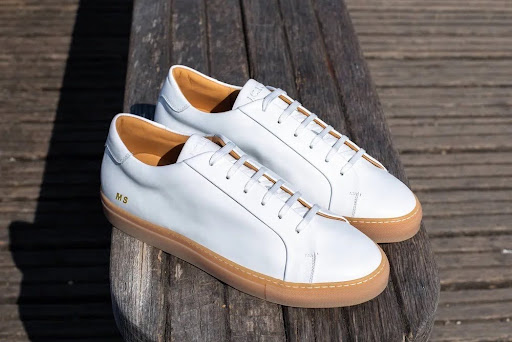
A smooth, finished leather upper keeps the clean, uniform surface most people expect from a white sneaker. Photo: J.C.LUTZ.
How to Tell Which Leather a Sneaker Uses
- Read the description: Makers that use vegetable-tanned leather usually say so, since it costs more and takes longer to produce. A description that mentions only “leather” with no tanning detail most often points to chrome.
- Look at a cut edge: Undyed chrome-tanned leather often shows a pale blue-grey core left from the “wet blue” stage of production. Veg-tan leather is tan or brown all the way through. Leather that is dyed through can hide the difference.
- Smell and feel: Veg-tan leather smells earthy and slightly sweet and feels firm, almost waxy. Chrome-tanned leather feels softer and more pliable from the first touch.
- Watch it over time: Vegetable-tanned leather darkens visibly within months of regular wear. Chrome-tanned leather changes very little.
Caring for Each Type
Vegetable-tanned sneakers need little more than regular attention. Brush off dust after wear, wipe the upper with a barely damp cloth, and condition sparingly a few times a year with a product made for vegetable-tanned leather. Conditioners darken veg-tan, so a test on a hidden spot comes first. Wet pairs should dry at room temperature with shoe trees inside, never against a radiator.
Chrome-tanned sneakers are easier to live with: a wipe after wear and an occasional light cream are usually enough. For pale and white leathers, the maker’s care guidance comes before any conditioner, since oils can mark light colors.
Which One to Choose
Neither method wins in every case. Chrome-tanned leather suits sneakers that need to look the same on day 300 as on day one, handle wet commutes, or come in bright and pale colors. Vegetable-tanned leather suits buyers who want a sneaker that changes with them, accept a short break-in, and are happy to trade a little care for a depth of color no factory finish can copy.
Either way, the tanning method is worth asking about. It says more about how a pair of leather sneakers will wear than almost anything on the price tag.