
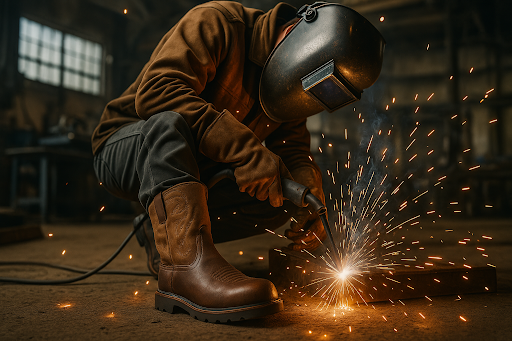
Welders are exposed to extreme heat, molten metal, UV radiation, and physical impact every day. The clothing they wear isn’t just about comfort; it can prevent serious injury. Among all the fabrics available for personal protective equipment, leather has earned its place as the most trusted material for welding gear. There’s a reason leather has been the standard in welding for decades. From jackets to aprons, gloves to welding boots, this natural material offers better protection, lasts longer, and fits more comfortably than synthetic alternatives.
Here are three reasons why leather remains the top choice for welders who need gear that actually performs.
1. Leather Handles Heat and Flame Better Than Synthetics
The biggest advantage of leather in welding is its response to heat. Unlike synthetic materials like nylon or polyester, which can melt or ignite easily under high temperatures, leather holds up under intense heat without compromising protection.
Welding arcs can reach up to 6,500 degrees Fahrenheit. According to the Occupational Safety and Health Administration (OSHA), ambient temperatures in a welder’s workspace can still climb above 1,000 degrees, depending on the method used. Leather, particularly cowhide and pigskin, won’t melt when hit with sparks, making it one of the safest materials for welding applications.
That’s why most welding gloves and jackets use split leather (the layer underneath the top grain). It forms a thick barrier that shields the welder from radiant heat, hot slag, and spatter, preventing serious burns. Leather also offers some UV protection, which is essential given that welding arcs emit significant ultraviolet light that can damage skin over time.
Leather doesn’t need chemical treatments to resist flame. Its natural density and structure make it inherently protective, and it breathes better than treated synthetics.
2. Leather Lasts Longer Under Tough Conditions
Welding is tough work, and gear needs to hold up under punishing conditions. That includes exposure to grinding sparks, sharp materials, repetitive movement, and frequent bending or kneeling. Leather excels in this environment thanks to its rugged grain structure and tear-resistant properties.
Leather Outlasts Flame-Resistant Cotton
A study by the American Welding Society found that leather outperformed flame-resistant cotton by more than 3 to 1 in abrasion resistance tests and nearly 2 to 1 in puncture resistance. This makes it the better choice not only for jackets and gloves but also for heavy-duty gear like welding aprons and footwear.
Welding Boots Take a Beating
Quality leather welding boots can last multiple seasons under daily wear, particularly if made from full-grain leather with Goodyear welt construction (where the upper is stitched to the sole for added durability). These boots are designed to withstand high heat and heavy use while providing excellent foot support.
Synthetics Break Down Faster
Synthetics wear out faster. Budget-grade workwear often shows wear after just a few weeks or months of regular use. Fraying seams, melted fibers, and reduced protection all lead to premature replacement. Leather stands up to friction, heat, and daily abuse without breaking down quickly.
You Pay More Upfront, But Save Long-Term
Welders who buy solid leather gear pay more upfront, but it lasts longer and requires fewer replacements. That adds up to real savings over time.
3. Leather Flexes and Breathes Better Than You’d Expect
While safety is always the top priority, comfort matters when you’re working long hours on your feet or in awkward positions. Leather delivers on flexibility, fit, and breathability, especially when properly treated or broken in.
Modern Leather Moves With You
Modern tanning processes have evolved significantly, transforming leather into a more adaptable and breathable material. Unlike the stiff and heavy welding jackets of the past, today’s leather garments are designed with mobility in mind. Articulated elbows, gusseted shoulders, and lightweight leather blends provide a full range of motion without sacrificing protection.
Flexibility Helps With Precision Work
This is particularly important for tasks that require fine motor control, such as TIG (tungsten inert gas) welding, where dexterity is critical. Gloves made from goatskin or pigskin provide the flexibility welders need to maintain precise control while still offering substantial burn resistance.
Leather Helps Regulate Temperature
Leather regulates temperature better than many synthetic fabrics. It naturally wicks moisture and allows for ventilation, which is essential in hot work environments. Good ventilation helps reduce the risk of heat stress, one of the top job site hazards identified by the National Institute for Occupational Safety and Health (NIOSH). According to NIOSH, heat stress accounts for a significant share of workplace injuries in industrial trades, underscoring the critical role of breathable gear.
Welding Boots Mold to Your Feet
Leather footwear has an ergonomic advantage. Leather welding boots often mold to the foot over time, delivering a more personalized, stable fit than rigid synthetic alternatives. This can reduce fatigue, improve balance, and prevent slips when working on slick or uneven surfaces.
For welders who work on concrete floors, in outdoor yards, or in fabrication shops, boots need to do more than protect. They need to support all-day wear. The best welding boots combine full-grain leather with heat-resistant soles and steel toe caps for maximum comfort and protection.
What to Look for in Leather Welding Gear
Not all leather performs the same when it comes to safety and comfort. Here’s what makes a difference:
- Split cowhide leather (the tougher underlayer) for jackets and aprons
- Kevlar stitching for reinforced seams
- Goatskin or pigskin for gloves (softer and more flexible)
- Full-grain leather with Goodyear welt construction for boots
- EH-rated outsoles (electrical hazard protection) and steel toe or metatarsal protection
Gear with these features protects better and lasts longer.
Final Thought
Leather has earned its reputation as the standard material for welding clothing thanks to its combination of safety, strength, and comfort. Whether you just started welding or you’ve been doing it for years, investing in quality leather gear, especially durable welding boots, can make a noticeable difference in both protection and productivity.
Welding doesn’t give you second chances. Sparks, heat, and heavy materials demand gear that can perform under pressure. Leather does just that, giving welders the confidence to focus on their craft without compromising safety or comfort.
For a deeper look at why quality gear matters across trades, Forbes has highlighted how improved PPE can improve workforce efficiency and long-term health outcomes in industrial roles.