Most leather mouse pads are crap. Don’t get me wrong, there are a lot of good options on the market. But for some reason since they are so simple it allows for a lot of shortcuts to be taken. Most of the mouse pads you see on Amazon take the shortcuts. The easiest way to see this is if they say genuine leather.
Genuine leather is essentially reconstituted leather. Leather that gets shaved off other hides is collected and pressed together with glue to form sheets of “genuine leather”. In my opinion it is desperately poor form to be calling this cheap imitation of leather “genuine”, but that is the state of our system right now. Anyways, avoid everything marked as “genuine leather”. It’s crap.
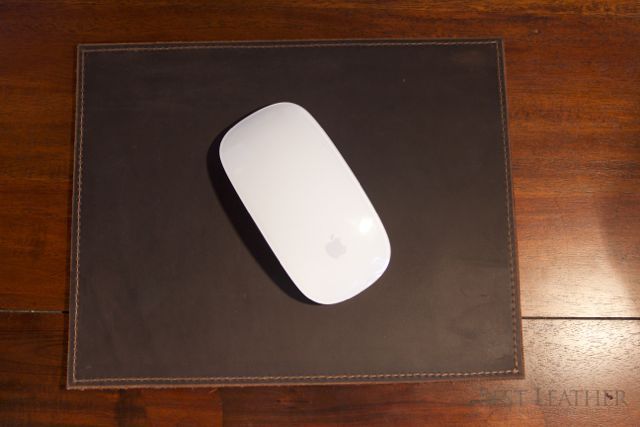
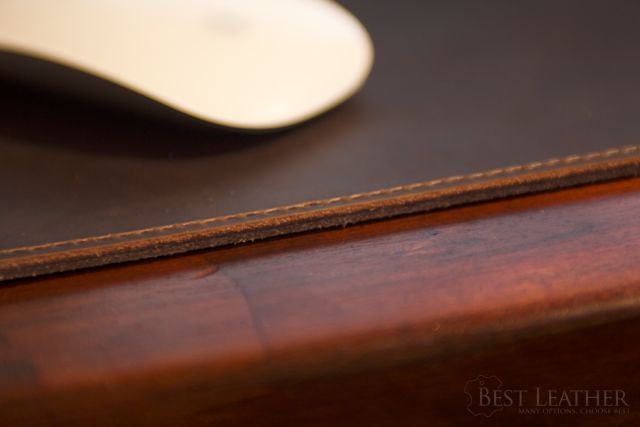
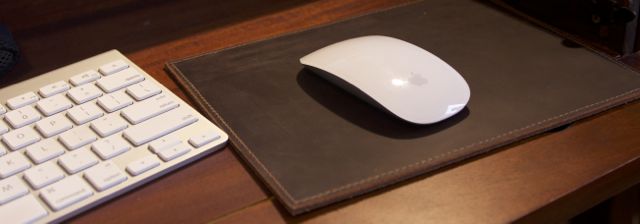
Anyways, UrbanCow on Etsy sells a pretty thick REAL leather mousepad. Pretty simple construction with two pieces of 3 oz stone oil leather sewn together with a single nylon thread. Double stitching would just be overkill.
If you haven’t tried a leather mouse pad I really recommend it. One of the great features of leather is its wonderful tactility. It feels good. I don’t know of any other leather products that I have my hands on nearly all day. UrbanCow’s mouse pad is made with this stone oil leather that I haven’t touched much of. It feels wonderful. It’s not exactly a pull-up leather since it doesn’t mark when you fold it but the feeling is very similar. Very rich in leather fragrance and feeling.
At $22, it’s a good deal. Fancier mouse pads are available from Bexar and Saddleback Leather but I’d rather just keep the dough.
Check out the UrbanCow, they are well rated with many sales on Etsy and shipping was pretty fast.
There is a small company on Kickstarter called Opus. They are selling, amoung some other really neat things, a leather wrapped journal. Kate Burrow from Opus sent me one to check out and share with you guys.
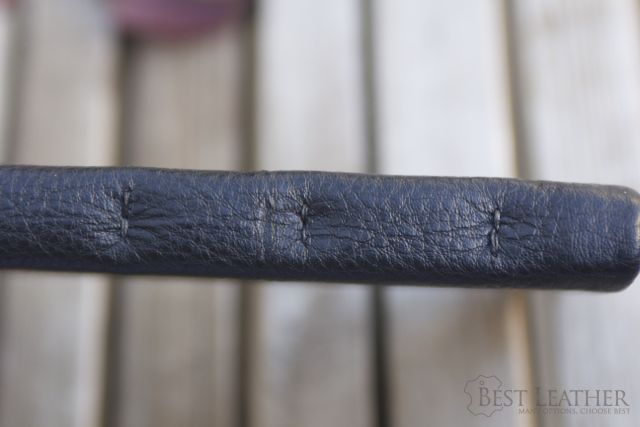
I’ve seen these hand bound notebooks but moleskines have always been my choice notebook because of how many pages they hold. What pops out to me with this Opus journal is the heavy paper and coptic stitching (here is a guide on doing your own coptic stitch binding notebook) for the binding which gives fantastic flexibility, unlike glued bindings. Several pages are already tearing off on my latest moleskin because of inflexibility in the glued binding.
So, with a coptic stitch binding you can do things like this without damaging the journal:
While the journal is bound in leather it isn’t full grain. There is a light 1 oz stamped (for texture) leather sheet wrapped around book board, commonly used in hardbacks. It feels nice. It’s soft and the texture is nice. Nice but not full grain grade.
The inside of the journal covers are glued down to the book board with a linen cloth lining.
The one problem that Kate assured me they were fixing was the weakness of the glue holding the interior fabric down to the backboard. I was able to gently tear the fabric away from the book board revealing the secret message; “Your determination will bring much success.”
The paper is heavy weight at 98 lbs and it is pretty nice to write on. My pen, a Pilot G-2 and a Parker fountain pen, glide right over the heavy paper.
If I were more of an artist I could use this journal more completely since the heavy paper allows you to draw and paint quite easily. If you paint in the journal I suppose you can’t close it, but a journal of paintings would be cool. Point is; you can use it for a lot more than journaling about your annoying boss.
Dimensions are the standard journal size, 5.5 inches by 8.25 inches. Normal.
I think this journal is for a lot more than just daily journaling. It deserves an artist with cool handwriting and an eye for pastel colors. Or use it for a special event where you write a series of meaningful letters that you want to save.
With the improvements to the book board adhesive that Kate is going to make I would recommend this journal for serious writers, artists, and people who want a memorable notebook to hold special memories (which is exactly what Opus designed it for).
Check out the other rewards Opus is offering as well. Some of them are pretty intriguing. Handwritten Shakespear scroll anyone?
The three easiest ways to identify a quality leather product right out of the box are stiffness, squeak, and smell. This is a stiff, squeaky, and smelly wallet.
Even in the intense environment of foundry work and the dirt and grime that can be acquired there, this bag has stood the test of toughness and continually demonstrated a hardy design. There has been no fraying of the leather around any edges and the only real sign of degradation is the missing button on the left side of the bag, which fell out after a few months.
functionality
The functionality of the bag is impressive. Every book needed for school, a laptop, and even some lunch can be contained in the bag and nothing would be protruding, yet still easily accessible. The shoulder strap guard is inconveniently placed, as it cannot be adjust to be used on both sides, only one.
The amount of pockets and dividers inside the back is convenient, allowing for separation and protection of goods placed inside, while the same time, not being too much. The thickness of the leather gives great protection for anything placed inside.
patina
Due to me taking this bag to a multitude of places, i.e. a foundry, coffee shops, and school, it has acquired a unique look, from metal dust staining the bottom and back, to the worn look of everyday use. None of the acquired characteristics in any way diminish the bags looks or functionality, but instead add to the character of it and make it more enjoyable to use. This bag’s sturdy construction and how it can handle the wear and tear make it fit in perfectly in my working environment, yet it’s style allow it to stand out.
compliments
This bag has brought me compliments left and right, it has great functionality, a beautiful look, and a tough character that earn my respect for it. It is definitely a bag I would recommend.
overall impression
I am surprised that it has already stood up to so much, in the rough conditions it’s used in, and still in the shape that it is.
If the small durability problems are ironed out; this will be a great bag.
I treated my tan leather motorcycle jacket entirely with Neatsfoot Oil to condition and darken it.
The transition was from a very light tan dry leather to a rich honey colored leather which looks very desirable. If you don’t want your leather to darken do not use Neatsfoot Oil.
Here is how it turned out:
Untreated and needing conditioning
partially conditioned
immediately after being fully conditioned, some especially dry parts got multiple passes
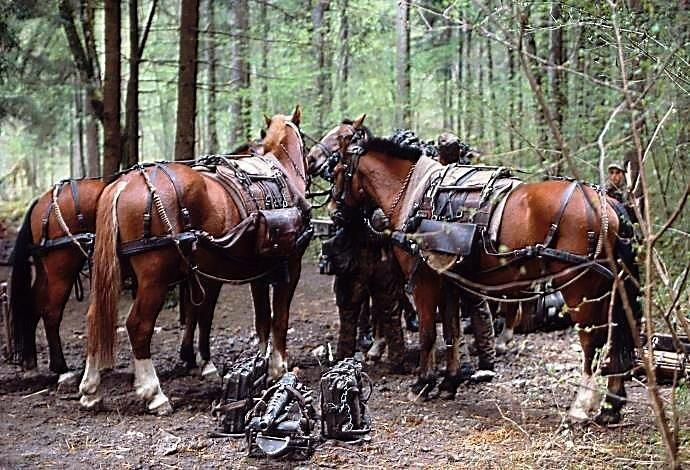
Did you know you can buy leather bags that are up to 100+ years old? It’s true. The Swiss Army used leather bags on their army pack horses, particularly the Freiberger breed which were known for their endurance. The horses and mules lightened the load for soldiers and allowed them to cover much more ground in strong fighting condition.
While soldiers were never relieved of carrying their own personal fighting equipment, the horses carried the more substantial armament, such as extra ammunition, mortars, and light artillery.
These bags were well made to endure the demanding circumstances of heavy loads in wartime and often used over and over as Swiss citizens served their time and returned their issued military equipment. Hence they often served for decades and acquire a beautiful patina.
The Swiss Army uses a conditioner called FIX which stays in the leather for a very long time and frequently all the bags need is a good cleaning to rid it of mold and dirt.
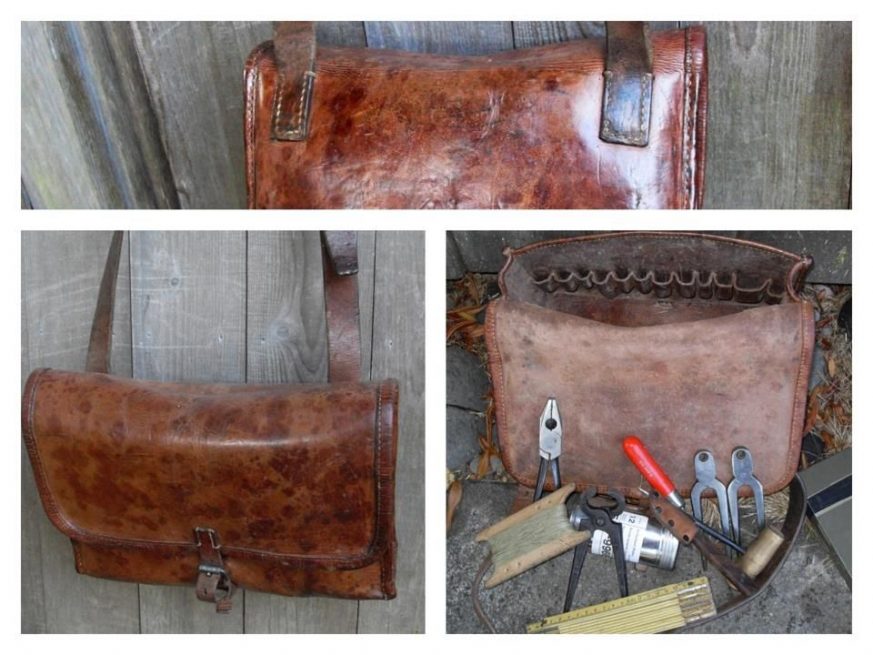
A small gunsmith bag.
Now, in these more sophisticated times, pack animals are much more rare in the military. Consequently the bag market sees vintage Swiss Army bags for sale. Here are some of the types of vintage swiss army bags in repair and original unrepaired condition, courtesy of Men A Werro from Leatherwerk, who is an excellent source for purchasing an original swiss army bag. Here are a selection of swiss army bags you can find.
As you browse through the selection of photos spend a moment to contemplate how old and how much abuse these leather bags have endured. Can you imagine a messenger bag from Target doing the same thing?
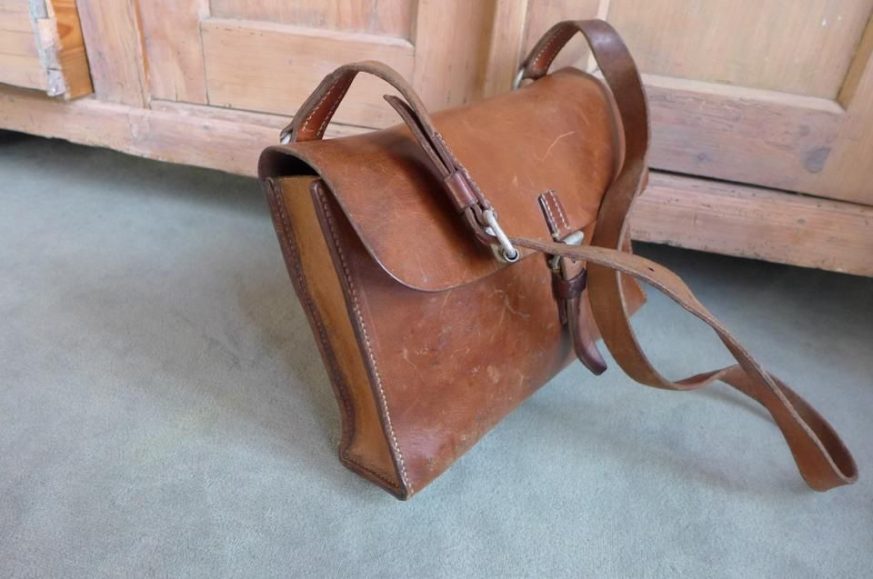
Here is mine, made in 1945. As I told you before, they were used by the pack train and attached with chains on the packsaddle. These come with chains but no strap so I custom made a strap from either Swiss Army rifle slings of the same age or leather straps that who knows what they were used for. I make optional straps or there is the desirable horse bit handle. Sometimes folks want a coin concho on the hinged flap. Oldest one I had in my hands was stamped 1918 I think, youngest one 1945.
It has a thick rear wall and thick leather hinged lid. Around 70 years old and tons of real patina that shows up only after many many moons of hard use!
Size is about 16″ x 12″ x 3 1/2″. It can carry bulky stuff too that is deeper than 3.5″. The picture below shows mine today in the rain.
The Medic Bag AKA Tailgate Bag
You can easily see the functionality of the medic bag. Required medical equipment is easily at hand without digging through things or having your bag fall closed while treating a wounded soldier. That would be a difficult problem to have while controlling bleeding.
shoulder bags
I’m not exactly sure what these bags were used for. The officer’s bags were smaller so it is likely these were used by infantry, but for what purpose? Anyone know?
Demolition Meister Bag
Fuses and explosives go in here. This has got to be one of the coolest bags.
packsaddle bags
The horses had packsaddles designed specifically for carrying their veterinarian equipment. Some of these leather packsaddles are from 1895!
Earlier versions of the Packsaddle bag were put over the horses neck. Earliest one I had between my fingers was made 1895, latest one 1917. 2 versions as far as I know. The earlier once were a bit larger and slightly more boxy looking.
large gunsmith bag
The large Gunsmith bag is actually a Packsaddle bag with added flaps on the sides (inside) and two pockets for small grease tins. It has an alloy badge too and the added straps system (no more chains for the horses) makes the bag either a messenger or a backpack. I guess the Swiss Army copied it from SBL – just kidding!
small gunsmith bag
Size: 4.0″ by 12.0″ by 9-10″ tall. Under the flap pocket is 7.5″ x 5.5″
Many are stamped with MP41 and some with MP43 when used by gunsmiths that were working in the field on the machine pistols 41 or the updated version 43. Very early version didn’t have a MP stamp. Some were used again in the late 50s for the “Sturmgewehr 57” (automatic rifle) by the gunsmiths. Those got K14.1.110 stamped on the alloy badge. It’s a pretty small bag for a gunsmith, especially for working on that automatic rifle.
These are one of my favorite styles, few were made through 1937 – 1945.
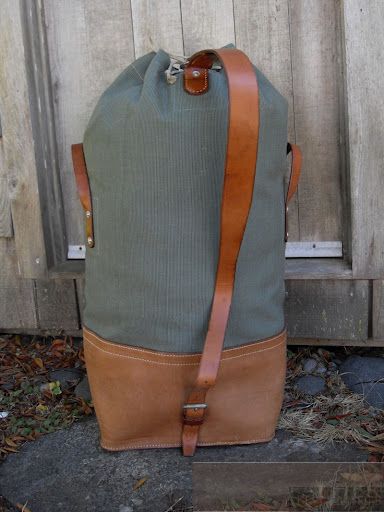
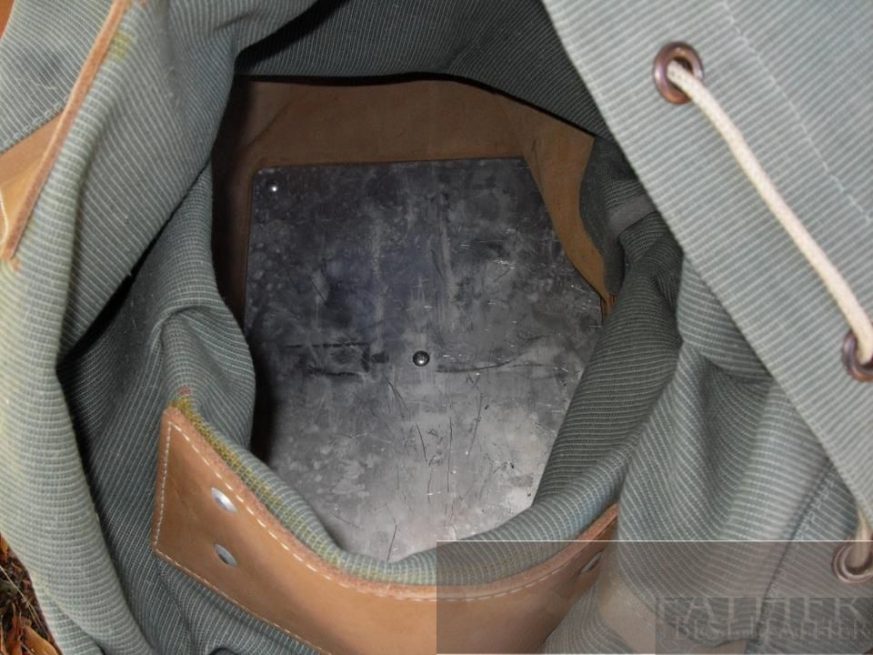
Swiss Army Duffle
These are made of Swiss Military grade heavy duty green canvas with thick leather. Alloy bottom plate, reinforcements at all stress points. About 40 years old in like new condition. Will last a lifetime or two! Very tough stuff.
stamps in the bags
These bags have specific individual stamps that indicate things like the name of the maker and the year.
Top line = makers name
Center line = Saddle Maker in either German, French, Romansh or Italian, the 4 languages of Switzerland
Bottom line = the town it was hand made which is the town/village the Saddlemaker was working.
Then most of the times there is a 2 digit number like 45 which represents the year the bag was made. It is not very often you can find a 4 digit year number like 1945.
How to buy a vintage swiss leather bag?
I could not have put this information together without Men A. Werro from Leatherwerk. He sells these bags which are individually sourced in Switzerland. You can check out his current stock of Swiss bags on his site, www.leatherwerk.blogspot.com. Men also makes several other leather goods from scratch such as the Pouchun and accessories for Saddleback Leather bags.